Eyeglasses Guides
High Bridge vs Low Bridge Glasses: Which Fit Is Right for You?


Glasses can be frustrating in a very specific way. You put them on, start your day, and before long they begin sliding down your nose like they have a plan of their own. You keep pushing them back up, or by the end of the day, you notice red marks from glasses sitting on your nose.
Most people think the issue comes from frame style or face shape. But in reality, the problem often comes down to one key detail: your nose bridge fit. Understanding the difference between high bridge vs low bridge glasses can completely change how your frames feel and perform.
At EFE Glasses, we design eyewear with real fit in mind—because when your glasses match your bridge type, everything from comfort to stability improves instantly.
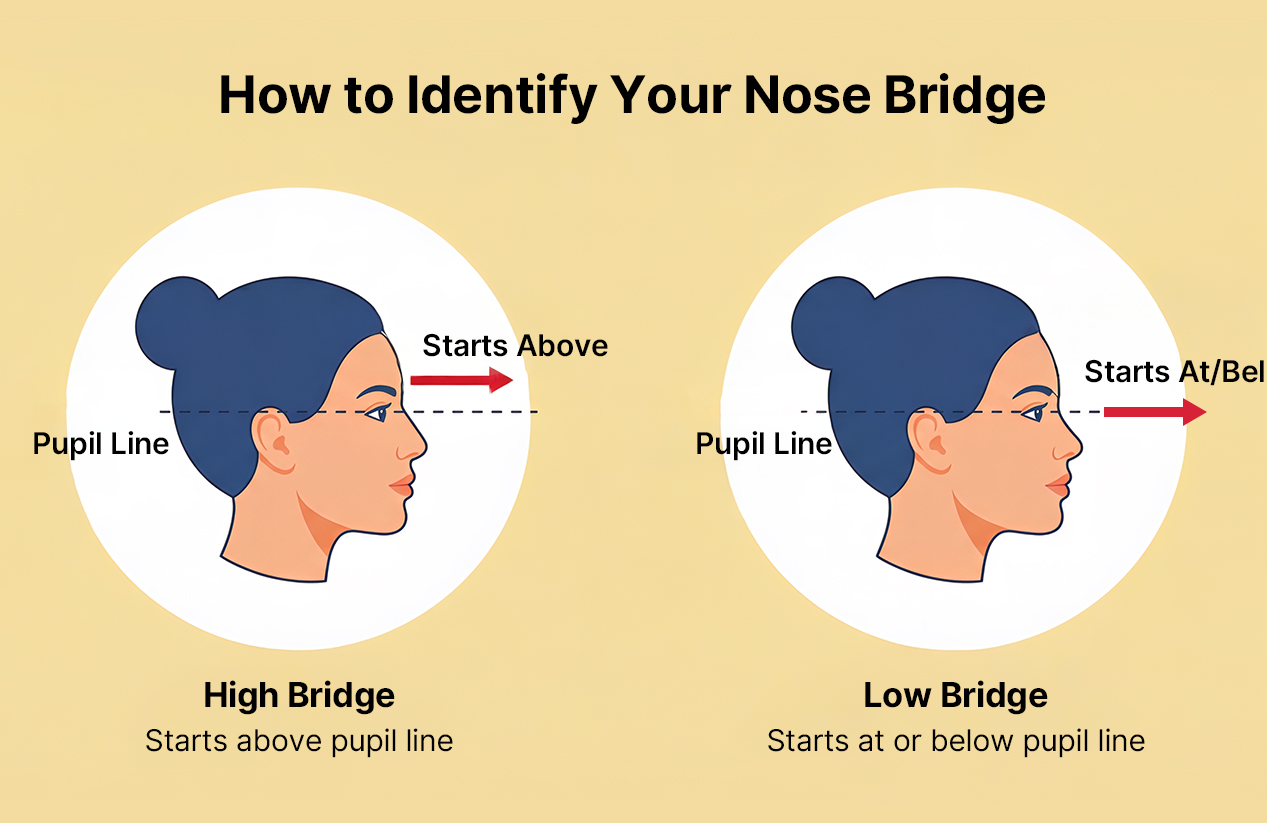
How to Identify Your Nose Bridge Type
To find your bridge type, stand in front of a mirror and look straight ahead with a relaxed face.
High bridge nose: The bridge starts above your pupil line. The nose appears more defined and angular.
Low bridge nose: The bridge begins at or below your pupil line. The nose looks flatter with a softer transition.
Once you know your bridge type, choosing the right glasses for your face shape and nose bridge becomes much easier—and far more effective.
High Bridge Glasses: Fit Challenges & Solutions
A high nose bridge often creates a strong, structured look, but it can still cause fit issues if the frame isn’t designed correctly.
Common problems:
Glasses slipping if the bridge width is too wide
Frames sitting too high and touching eyebrows
Lenses sitting too close, causing eyelash contact
Best solutions for high bridge glasses:
Narrow bridge width (15–18 mm) for a secure fit
Keyhole bridge frames that rest along the sides of the nose
Flatter frame fronts to avoid tilting or cheek contact
Acetate frames with well-designed built-in support
These adjustments help create a more stable and comfortable fit for glasses for high nose bridge wearers.

Low Bridge Glasses: Fit Challenges & Solutions
A low nose bridge presents a different set of challenges. Without enough natural support, glasses tend to slide forward or rest on the cheeks.
Common problems:
Glasses constantly slipping down
Frames touching cheeks when smiling
Fogging from reduced airflow
Tight temples causing pressure and discomfort
Best solutions for low bridge glasses:
Adjustable nose pads (especially S-shaped or gooseneck arms)
Silicone nose pads for better grip and comfort
Frames designed specifically as low bridge fit glasses
Adjustable pads allow you to customize the fit, creating stability where your nose may not naturally provide it. Compared to fixed acetate bridges, these are far more reliable for glasses for low nose bridge users.

Quick Comparison: High Bridge vs Low Bridge Fit Tips
High bridge fit tips:
Choose narrower bridges
Look for keyhole designs
Avoid overly curved frames
Low bridge fit tips:
Prioritize adjustable nose pads
Use soft silicone supports
Avoid wide, fixed bridge frames
Understanding these differences is key when searching for the best glasses for nose bridge fit.

Choosing the Right Frames with EFE Glasses
At EFE Glasses, we design frames that adapt to different face structures, ensuring both comfort and style.
For high bridge wearers: frames with precise bridge sizing and balanced structure
For low bridge wearers: styles with adjustable nose pads for personalized support
The goal isn’t just to find glasses that look good—but ones that feel right all day long.
Conclusion
When your glasses don’t fit, it’s not something you should just tolerate. The right nose bridge glasses fit can eliminate constant slipping, pressure points, and discomfort.
Once your frames are matched to your bridge type, everything changes:
No more sliding
No more pinching
Just clear, stable, all-day comfort
With thoughtfully designed options from EFE Glasses, finding the perfect fit becomes simple. Because great vision should always come with great comfort.