It often begins subtly. One day you’re scrolling on your phone as usual, and the next, the text suddenly looks blurry. So you move your phone a little farther away. Then even farther. Eventually, your arm is fully extended like you’re playing an invisible trombone.
Eye care professionals jokingly call this the “Trombone Effect.” And once it starts, you’ll notice it everywhere.
If this sounds familiar, don’t worry. This isn’t a disease, and nothing is “wrong” with your eyes. It’s a completely natural part of aging that affects nearly everyone. Even people who’ve had perfect vision their whole lives experience it.
The medical term for this is presbyopia—literally meaning “aging eye.” While the name sounds serious, the condition itself is very manageable. With modern solutions like progressive lenses for presbyopia, clear vision can be restored comfortably and stylishly.
Why Does Presbyopia Happen?
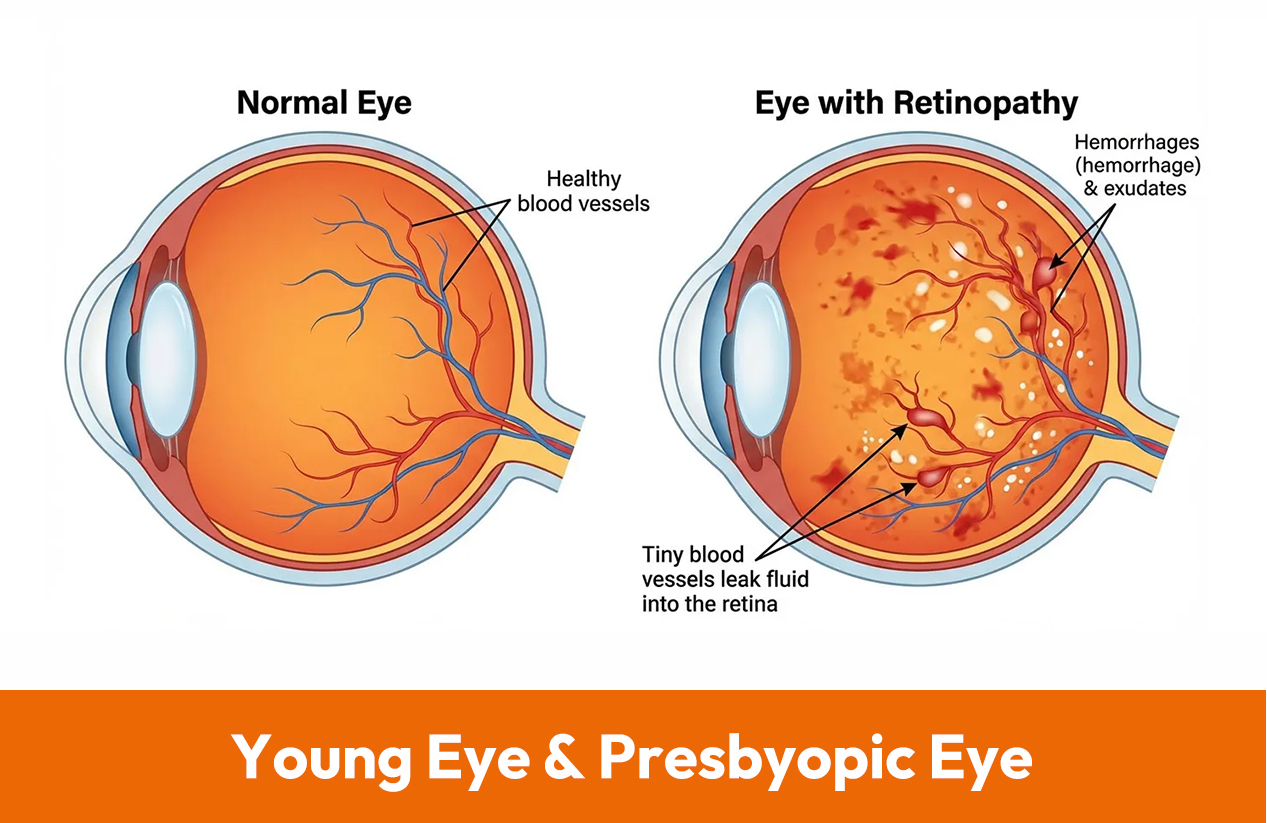
To understand what is presbyopia, it helps to look inside the eye.
Your eye contains a clear structure called the crystalline lens. When you’re young, this lens is soft and flexible. It easily changes shape to help you focus on close objects like books, phones, or screens.
Over time, however, the lens gradually becomes less flexible—more like firm rubber than soft gel. This process happens slowly, so you don’t notice it day by day.
At the same time, the ciliary muscles that control the lens also weaken slightly.
As a result:
The lens cannot bend as easily
Close-up focus becomes more difficult
Light no longer lands precisely on the retina
Instead of focusing directly on the retina, light falls slightly behind it—causing near objects to appear blurry.
This is the core reason behind presbyopia symptoms.

Common Presbyopia Symptoms
Many people recognize presbyopia before visiting an eye doctor. If you’re over 40, these signs may feel familiar:
Holding reading material farther away to see clearly
Needing brighter light for reading or close work
Eye strain or fatigue after screen time or reading
Slower focus changes between near and far objects
One important detail: these symptoms are consistent. If they happen regularly—not just when you’re tired—it’s likely presbyopia rather than temporary eye strain.
Presbyopia vs. Hyperopia: What’s the Difference?
It’s easy to confuse presbyopia with farsightedness (hyperopia), since both affect near vision.
Here’s the key difference:
Hyperopia (farsightedness): caused by the shape of the eye and can occur at any age
Presbyopia: caused by age-related lens stiffening and typically begins after 40
To make things more complex, you can have both conditions at the same time. That’s why many people notice more frequent prescription changes as they get older.
Presbyopia Treatment Options
The good news? Presbyopia is one of the easiest vision issues to correct. There are several effective presbyopia treatment options depending on your lifestyle and preferences.
1. Reading Glasses
Reading glasses for over 40 are often the first solution people try.
They are:
Simple and affordable
Effective for short-term close tasks
However, they have limitations:
You must constantly take them on and off
They don’t help with distance vision
Generic readers may not suit uneven prescriptions or astigmatism
Custom prescription readers—like those from EFE Glasses—offer better comfort and accuracy for daily use.

2. Bifocal Lenses
Bifocals include two viewing zones:
Top: distance vision
Bottom: near vision
While effective, they have a visible line and a noticeable “jump” when switching focus, which some users find inconvenient or outdated.
3. Progressive Lenses (Best Modern Solution)
Progressive lenses for presbyopia are the most advanced and popular option today.
They provide:
Smooth, no-line transition between distances
Three zones: distance, intermediate (computer), and near
A natural viewing experience without abrupt changes
The biggest advantage?
One pair of glasses handles everything.
Modern progressive glasses from EFE Glasses combine advanced lens technology with stylish frames—making them feel less like a necessity and more like an upgrade.
4. Surgical Options
Some people consider surgical solutions such as:
Monovision LASIK
Lens replacement surgery
While effective, these options involve higher costs and permanent changes. For most people, glasses remain the safest and most flexible solution.
Conclusion
Presbyopia isn’t a flaw—it’s a natural part of how our eyes age. And while you can’t stop it, you can absolutely manage it.
With the right solution—especially modern progressive lenses—you can enjoy clear, comfortable vision at every distance.
If you’re noticing early presbyopia symptoms, now is the perfect time to upgrade your eyewear. Explore stylish, high-quality options from EFE Glasses and find frames that support both your vision and your lifestyle.
Because seeing clearly after 40 isn’t about compromise—it’s about choosing smarter, better solutions.