Detailed Diopter Chart Explanation
Finding the right strength of reading glasses is crucial for comfortable and clear vision. A diopter chart, also known as a vision chart, is a valuable tool that helps you determine the appropriate magnification for your reading glasses. This detailed explanation will guide you through the process of using a diopter chart, understanding the readings, and selecting the right reading glasses for your needs. We'll also cover different testing conditions and provide specific case examples to ensure you get the most accurate results.
What is a Diopter Chart?
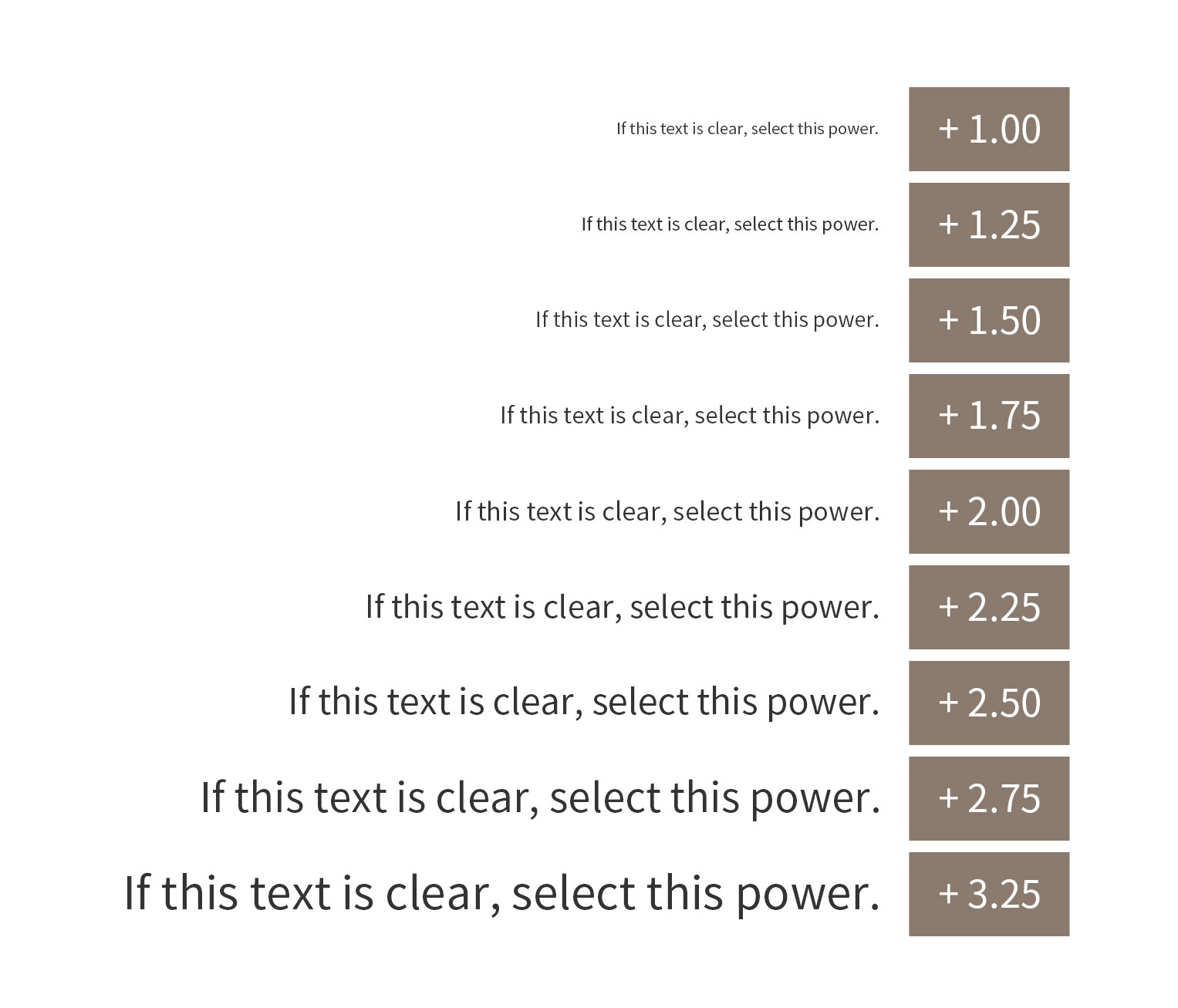
A diopter chart is a standardized chart that contains lines of text in decreasing font sizes, each corresponding to a specific diopter strength. Diopter is the unit of measurement used to quantify the refractive power of a lens. The higher the diopter number, the stronger the magnification. Diopter charts typically range from +0.75 to +3.50 diopters, with increments of +0.25 diopters. This range covers the most common magnification needs for reading glasses.
The purpose of a diopter chart is to simulate the experience of reading at a close distance and determine the magnification strength that provides the clearest and most comfortable vision. By reading the chart at a specific distance, you can identify the diopter strength that allows you to see the text clearly and without straining your eyes. This information can then be used to select the appropriate reading glasses.
How to Use a Diopter Chart: A Step-by-Step Guide
- Prepare the Chart: Download and print a diopter chart from a reputable source. Ensure that the chart is printed at the correct size and resolution. You can also use an online diopter chart displayed on a computer screen or mobile device.
- Set Up the Testing Environment: Choose a well-lit room with minimal distractions. Position yourself approximately 14-16 inches (35-40 cm) away from the chart. This is the typical reading distance for most people.
- Test Each Eye Separately: Cover one eye with your hand or an eye patch. Read the chart with your uncovered eye, starting from the top line and moving down. Note the smallest line that you can read clearly and comfortably.
- Repeat for the Other Eye: Cover the eye that you just tested and repeat the process with your other eye. Note the smallest line that you can read clearly and comfortably.
- Determine the Diopter Strength: The diopter strength corresponding to the smallest line that you can read clearly is the recommended magnification for your reading glasses. If you can read the same line with both eyes, you can use the same diopter strength for both lenses. If there is a difference between your eyes, you may need to purchase reading glasses with different diopter strengths for each lens.
Understanding Diopter Readings
The diopter readings on the chart indicate the amount of magnification needed to correct your near vision. A reading of +1.00 diopter means that you need a lens with a magnification power of 1.00 diopter to see clearly at a close distance. The higher the diopter number, the more magnification you need.
It's important to note that the diopter strength you need for reading glasses may change over time as your eyes age. It's recommended to retest your vision periodically and adjust your reading glasses accordingly.
Different Testing Conditions and Recommendations
- Lighting: Ensure that the testing environment is well-lit, but avoid direct glare on the chart.
- Distance: Maintain a consistent reading distance of 14-16 inches (35-40 cm) throughout the test.
- Eye Fatigue: If you experience eye fatigue or discomfort during the test, take a break and try again later.
- Existing Vision Correction: If you already wear glasses or contact lenses for distance vision, you may need to wear them during the diopter chart test to get accurate results.
Specific Case Examples
- Case 1: A 45-year-old individual can read the +1.50 line clearly with both eyes. The recommended reading glasses strength is +1.50 diopters.
- Case 2: A 55-year-old individual can read the +2.00 line clearly with the right eye and the +2.25 line clearly with the left eye. The recommended reading glasses strength is +2.00 diopters for the right lens and +2.25 diopters for the left lens.
- Case 3: A 60-year-old individual can only read the +3.00 line clearly with both eyes. The recommended reading glasses strength is +3.00 diopters. It's also recommended to consult with an eye care professional to rule out any underlying eye conditions.
Video Tutorial and Case Analysis
To further enhance your understanding of how to use a diopter chart, we recommend watching a video tutorial that demonstrates the process step-by-step. The video should cover the following topics:
- How to download and print a diopter chart
- How to set up the testing environment
- How to test each eye separately
- How to interpret the diopter readings
- How to select the right reading glasses
In addition to the video tutorial, we also recommend reviewing case analyses that provide real-world examples of how to use a diopter chart and select the appropriate reading glasses. These case analyses should cover a variety of scenarios and address common questions and concerns.
Online Diopter Chart: A Convenient Alternative
For those who prefer a digital option, an online diopter chart is a convenient alternative. These charts can be accessed on a computer screen or mobile device and offer the same functionality as a printed chart. However, it's important to ensure that the online chart is displayed at the correct size and resolution for accurate results.
By following these guidelines and using a diopter chart correctly, you can find the right reading glasses strength and enjoy clear, comfortable vision for all your reading and near vision tasks.
How do I determine what reading glasses power I need?
If you're new to reading glasses and aren't sure where to start, we've made it easy to figure out your reading power.
Option #1: Use a Printable Diopter Reading Test Card
Diopter charts have rows of words ranging in text size that correspond to reading glasses strengths. If you're purchasing reading glasses online, you can use our printable diopter chart below. With the printed sheet 14″ away, attempt to read the top line without reading glasses. Continue down the chart until you find a line you can read clearly without your glasses on – this is the diopter (power/magnification) you need.
Tip: Make sure to remove your glasses when you use the diopter test. If you have different vision needs in your right and left eye, simply cover up one eye at a time to test each eye individually with our diopter chart. Reading glasses strength chart online:
Option #2: Finding Your Reading Glasses Power By Age
Finding Your Reading Glasses Power By Age is essential for ensuring clear and comfortable vision. Sometimes the reading glasses power by age chart can also be useful to determine the right pair of reading glasses for you.
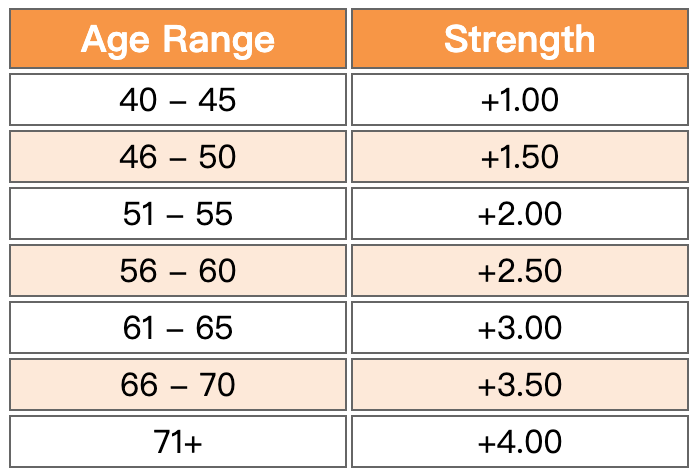
This recommendation is also most likely to help you get suitable reading
glasses.
However, these are rough estimates, and it's crucial to consult an eye care
professional for an accurate assessment. They can perform an eye exam, use an
eye chart to determine your visual acuity, and recommend the most appropriate
reading glasses power for your needs. Remember, finding the right reading
glasses power can greatly enhance your reading experience and overall visual
comfort.
Tips and Considerations:
An eye chart for reading glasses is handy, but consider your lifestyle,
visual demands, and eye health. Professional advice is crucial for optimal
vision and comfort, the expert's input can ensure you get the right glasses for
optimal vision and comfort!
For more about reading glasses, you can click on this or EFE's Learning Center.


