
Learning Center
Reading Glasses for Outdoors: What Works for Books, Menus, Maps, and Phones?


Reading outdoors gets awkward when sunglasses come off every time you need readers for a menu, map, book, fishing knot, or phone. The easiest setup depends on how long you read, how often you look up at a distance, and whether you already wear prescription lenses. Standard reading glasses may be enough for occasional close-up tasks, while reading sunglasses, bifocals, or prescription sunglasses can make frequent outdoor reading much simpler.
Quick Answer
Full-lens reading sunglasses suit books and other sustained close-up tasks.
Bifocal reading sunglasses let you check a menu, map, phone, or fishing line and then look up without changing pairs.
Prescription sunglasses provide the ideal foundation for distance correction, provided the lens configuration includes the appropriate near-vision segment.
Separate pocket readers remain the simplest and most cost-effective choice for brief, occasional close-up checks.
Why Outdoor Reading Feels Different from Indoor Reading
Your near-vision need does not suddenly change outdoors, but the viewing environment does. Sunlight, reflections, shifting shade, and frequent transitions between close items and distant scenery make single-purpose glasses less convenient.
For many adults, reading glasses become essential when presbyopia diminishes natural close-focus ability. The National Eye Institute’s overview of presbyopia lists reading glasses and corrective lenses among the most reliable ways to restore near focus. Outdoors, the key decision is how to integrate that magnification with dependable ultraviolet protection and clear intermediate or distance vision.
That is why someone reading a novel on the patio requires a completely different lens configuration than someone sightseeing and checking their smartphone every few minutes.

Menus, Books, Maps, and Phones Need Different Viewing Habits
Always choose your eyewear around the primary visual task. The primary factor is whether your eyes remain focused up close or constantly shift between near and distant focal points.
Outdoor Task | Viewing Pattern | Practical Option |
|---|---|---|
Patio or beach reading | Sustained focus at a single close distance | Full-lens reading sunglasses |
Restaurant menu | Brief close reading followed by looking across the table | Bifocal reading sunglasses or portable readers |
Map or travel guidebook | Repeated alternation between fine detail and landmarks | Bifocal or progressive sunglass setup |
Smartphone while sightseeing | Frequent short screen glances between walking | Bifocal reading sunglasses or prescription multifocals |
Gardening labels and seed packets | Intermittent close inspection while moving through yard | Bifocal readers or tinted bifocal sunglasses |
Fishing knots and rigging tackle | Precise fine detail combined with scanning water surfaces | Polarized bifocal reading sunglasses |
A full reading lens feels natural for a novel because your gaze remains at a fixed focal length. Conversely, menus, navigation maps, and smartphone screens represent quick tasks where you read for a few seconds before shifting your gaze back to companions, trail markers, or traffic.
For smartphones and digital e-readers, increasing default text size and boosting backlight levels can noticeably improve text clarity under bright ambient daylight.
Reading Glasses, Reading Sunglasses, and Prescription Sunglasses
While these optical categories overlap, each addresses a distinct outdoor lifestyle pattern.
Standard reading glasses serve as an easy solution when distance vision remains crisp and you only require magnification within arm's reach. The current reading glasses collection at EFE encompasses classic readers alongside bifocal, multifocal readers, and tinted sun-reading options.
Reading sunglasses integrate designated near-vision diopter powers directly into sun-tinted lenses. Full-lens iterations excel when reading is your primary pursuit—such as relaxing poolside with a paperback, crossword, or knitting project. In contrast, bifocal versions position the reading segment in the lower third of the lens, leaving the upper portion clear for general distance viewing.
Prescription sunglasses remain indispensable if you already wear corrective lenses outdoors for myopia, hyperopia, or astigmatism. When you also experience presbyopia, ordering lenses configured with multifocal or progressive powers ensures smooth transition between horizons and close-up text.
A simple evaluation clarifies your need: when glancing up from a page, do you prefer to keep your glasses on? If so, selecting a bifocal, multifocal, or prescription-based lens will prove far more functional than full-lens readers.
When Bifocal Reading Glasses Make Outdoor Tasks Easier
Specialized bifocal reading glasses are especially valuable for rapid, alternating near-and-far tasks. The lower crescent segment delivers designated magnification, while the rest of the lens supports unmagnified or distance vision. EFE’s bifocal glasses selection includes both non-prescription and custom prescription configurations.
This optical layout naturally aligns with dynamic outdoor tasks. At a terrace bistro, you can review the bill and look up to engage in conversation. While navigating a new city, you can read transit schedules and spot street signs instantaneously. Gardeners can inspect tiny plant tags and scan flowerbeds, while anglers gain clear line-tying ability without losing sight of distant water ripples.
Although full-lens readers afford a wider uninterrupted field of vision for continuous chapter reading, bifocals become progressively superior as focal transitions increase. Proper optical fitting is critical, ensuring the dividing line sits precisely where your lower eyelids rest in a natural forward gaze.
Light, Glare, and Frame Comfort for Outdoor Reading
Certified UV defense should head your checklist whenever selecting outdoor eyewear. The FDA explicitly recommends wearing sunglasses rated UV400 or 100% UV protection, reminding wearers that darker lens tints alone do not signify greater ultraviolet safety.
Surface glare introduces a separate challenge. High-quality polarized lenses reduce reflected glare from horizontal surfaces such as open water, car hoods, and light-colored pavement, making them valuable for fishing or beachside reading. Remember that polarization filters reflected glare, whereas UV coatings shield ocular health—confirming both features ensures optimal comfort.
Frame comfort becomes critical during extended outdoor meals or long reading sessions. Look for an ergonomic nose bridge, non-pinching spring hinges, and an accurate frame width that remains secure when looking downward. These fit fundamentals apply universally when shopping for reading glasses for women, whether you prefer chic cat-eye profiles, classic rectangles, or retro round designs.
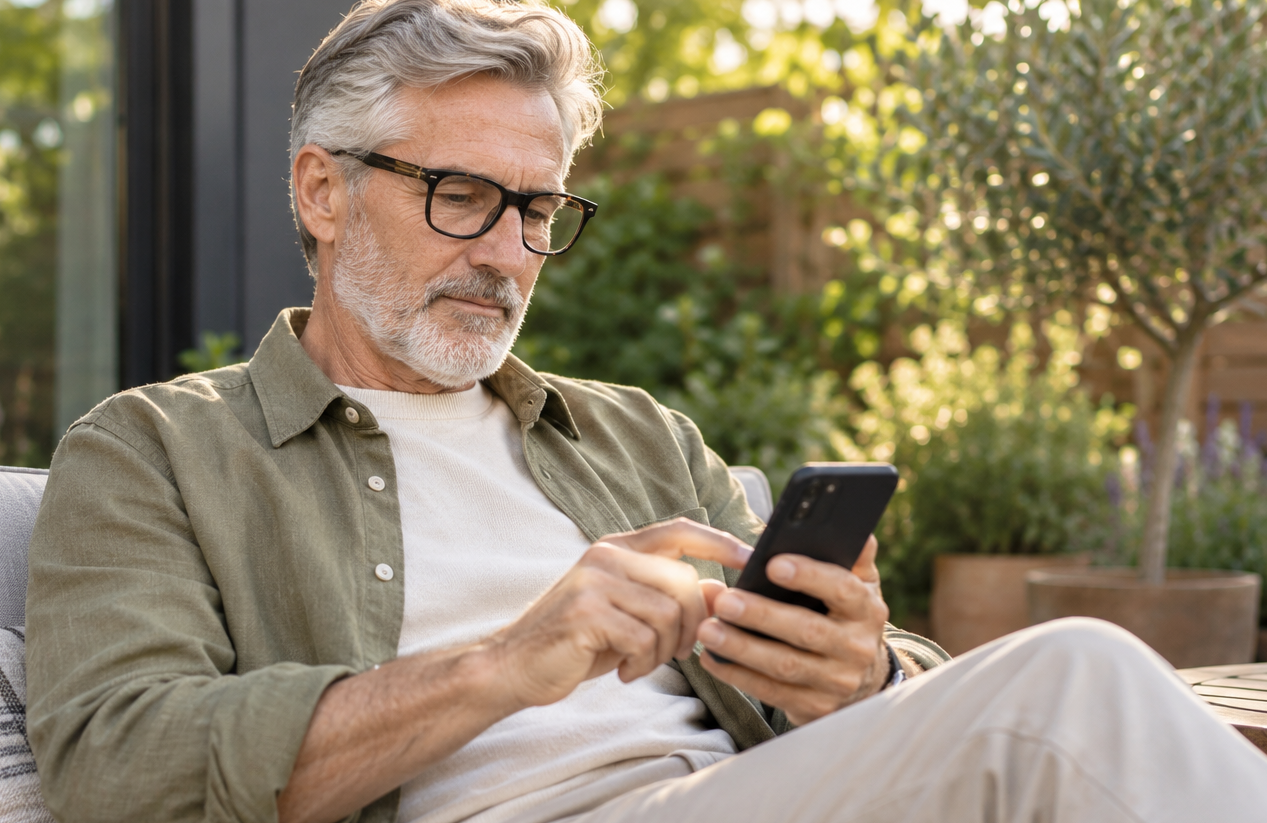
If you regularly read from a smartphone or tablet outdoors, test your device at typical viewing angles. The combination of polarized filters and digital LCD displays can sometimes produce dark patches or rainbow artifacts, making it prudent to verify screen legibility in natural sunlight.
Make Outdoor Reading Feel Less Fussy
Build your eyewear routine around the tasks you perform most frequently. If you predominantly sit and read in the garden, a single pair of full-lens reading glasses or reading sunglasses handles the assignment completely. If your day involves a mix of sightseeing, conversation, map navigation, and texting, bifocal reading sunglasses reduce the frustration of swapping pairs. If distance correction is already part of your daily life, opting for prescription sunglasses with an integrated reading segment provides the most streamlined experience.
Many individuals find keeping two specialized pairs practical. A dedicated full-lens pair works best for two hours with a novel, whereas bifocal sunglasses provide seamless versatility for hiking or dining out. Matching lens design to reading duration ensures comfortable, uninterrupted vision throughout the day.

Conclusion: Choosing the Right Glasses for Outdoor Reading
Outdoor reading becomes effortless once your eyewear matches your daily visual habits. Full-magnification lenses or reading sunglasses excel for sustained reading, bifocals accommodate continuous focal changes, and prescription sunglasses solve complex vision requirements when distance correction is mandatory. By balancing task duration, eye-movement frequency, and environmental sun glare, you can select the perfect outdoor eyewear without unnecessary hassle.
Common Questions About Reading Glasses for Outdoors
Q1: Can you get reading glasses that are also sunglasses?
Yes. Reading sunglasses incorporate tinted sun protection with near-magnification diopters. They are available in both full-lens reading formats for extended reading and bifocal formats for mixed-distance viewing.
Q2: Are bifocal reading sunglasses good for using a phone outdoors?
Yes. They are convenient for reading notifications or maps because you can glance down at the screen and look up across the street without removing your sunglasses.
Q3: Do prescription sunglasses work for reading?
They work effectively whenever the lenses are crafted with multifocal, progressive, or bifocal configurations. A distance-only prescription will correct faraway sights, but reading small text requires adding the appropriate reading add power.
Q4: Should I choose polarized lenses for outdoor reading?
Polarized lenses are beneficial for cutting harsh reflections from water, sand, or white tabletops. Be sure to check that your smartphone or e-reader screen remains legible when viewed through polarized filters at your preferred reading angle.

