Other
Rimless Glasses and Makeup: How to Keep Your Eye Look Visible


If your eyeshadow, liner, or lashes seem to disappear once your glasses go on, the frame may be part of the reason. Thick rims can cross the eyelid or compete with detailed eye makeup, while rimless glasses leave more of the eye area visually open. The right frame structure, lens shape, and makeup placement can help your finished look stay visible without requiring heavier makeup.
Quick Takeaways
Rimless glasses leave the eyelid area visually open because there is no continuous rim around the lenses.
Semi-rimless glasses add more definition at the top while keeping the lower part of the eye area relatively open.
Lens shape and size matter as much as rim thickness when you want eyeshadow or liner to stay visible.
Lashes, nose makeup, and foundation need a little extra attention where glasses physically touch the face.
Why Rimless Glasses Let More of Your Eye Makeup Show
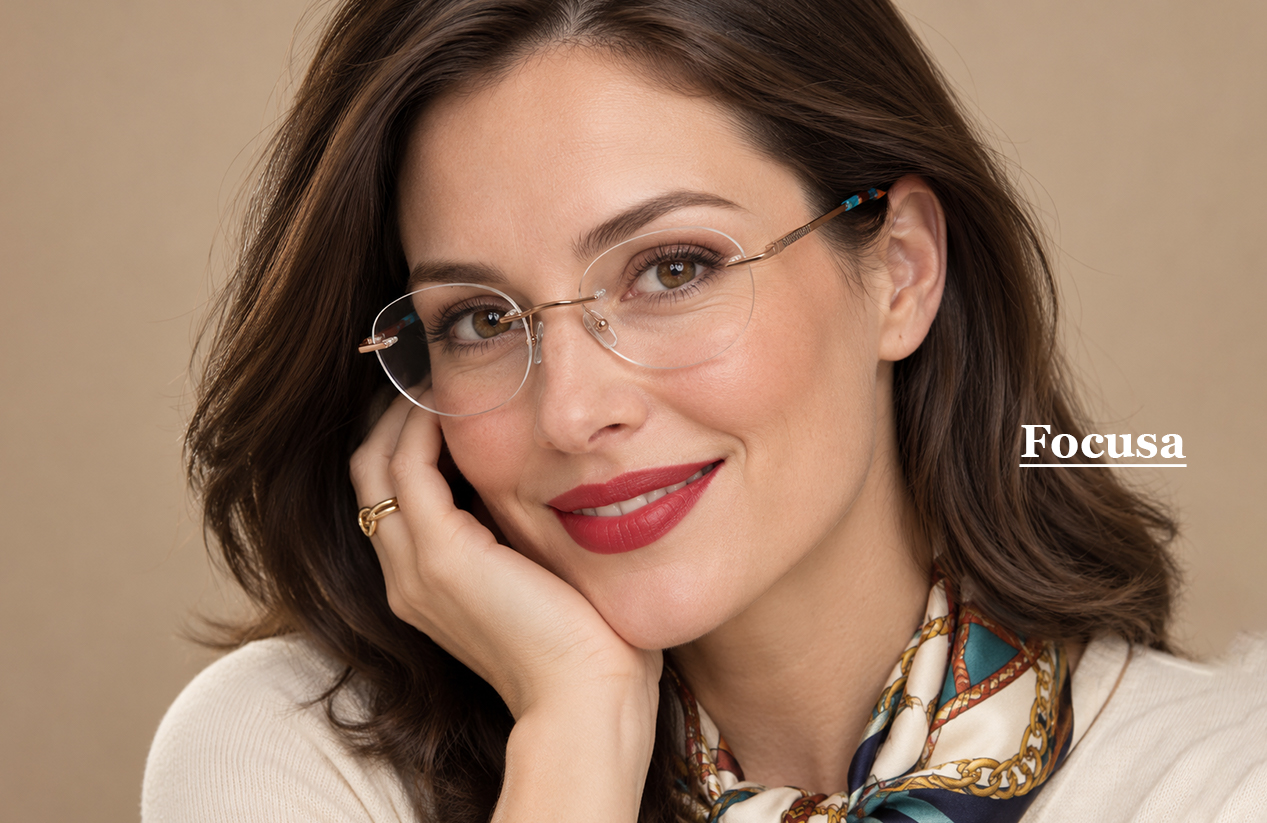
Rimless glasses leave more of the eye area visually open because there is no full frame surrounding the lenses. This makes it easier for eyeshadow, eyeliner, and lashes to stay visible instead of competing with a dark or thick rim.
The effect is especially noticeable with blended shadow, winged liner, or other details placed near the outer eye. However, frame style is only part of the result. Lens height, width, and shape also affect how much of your makeup remains visible once the glasses are on. Your prescription can influence the appearance of the eye area as well, so it is best to check your finished makeup while wearing the actual pair.
Rimless vs. Semi-Rimless Frames for Makeup Wearers
Both rimless and semi-rimless glasses can work well with visible eye makeup, but they create different amounts of structure around the eyes. Rimless frames keep the effect especially light, while semi-rimless glasses usually place a visible frame line across the upper part of the lens. The difference becomes easier to see when you compare where that frame line sits in relation to your makeup.
Frame style | Visual effect around the eyes | Makeup it tends to leave most visible |
|---|---|---|
Rimless | Very little visible border | Detailed eyeshadow, colourful liner, soft smoky looks |
Semi-rimless | More definition across the upper lens | Lower-lid details, lashes, simple or defined upper-eye looks |
Full-rim | Stronger outline around the entire lens | Makeup designed to work with a more noticeable frame |
For someone who regularly wears blended eyeshadow across the full lid, a rimless design creates the least visual interruption. A semi-rimless frame can be a useful middle ground when you still want your glasses to add some definition around the brow and upper eye.
Colour also matters. A dark semi-rimless upper bar naturally draws more attention than a fine silver or light metal one. Look at the complete combination of rim, colour, lens shape, and makeup rather than assuming one frame category will always create the same effect.
How Frame Shape Changes the Visibility of Eyeshadow and Liner
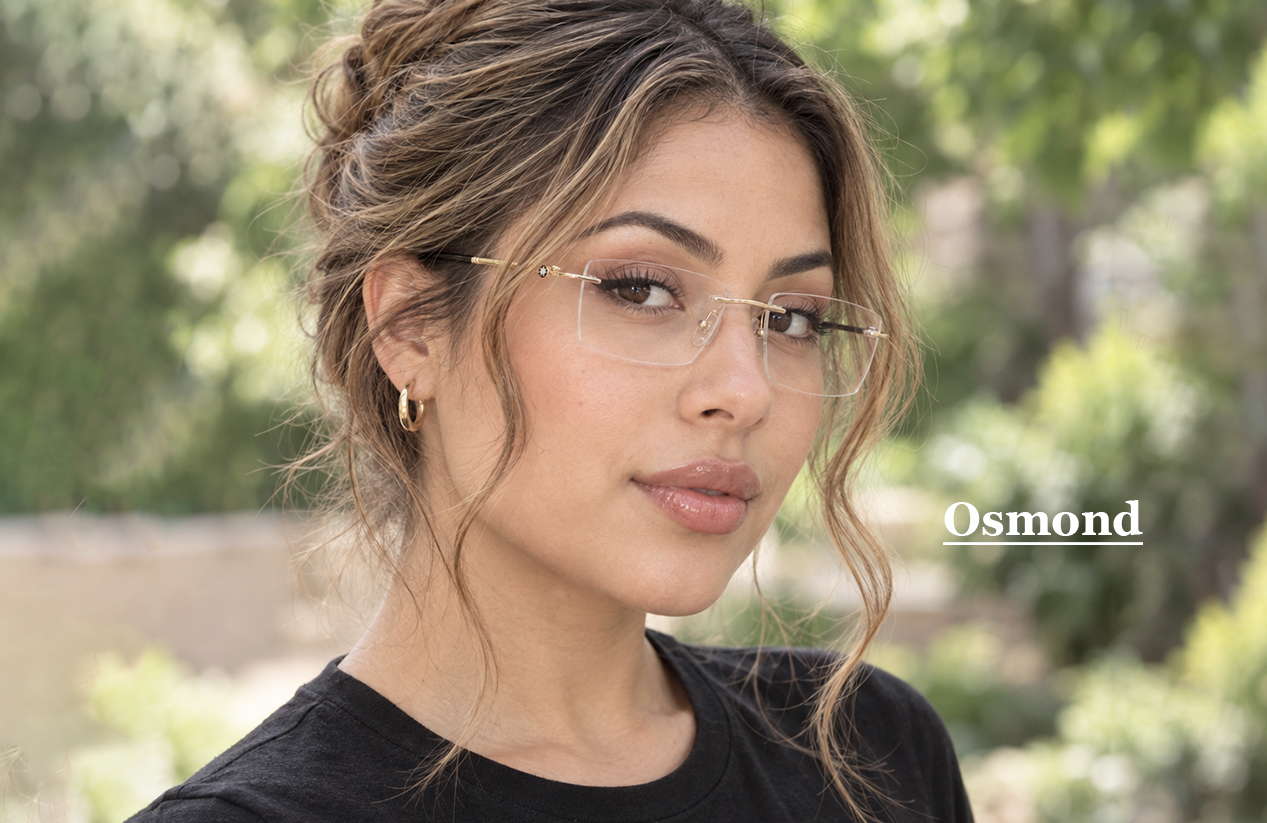
A low-visual-weight frame helps, but the frame shape of the lenses determines which parts of your eye makeup remain inside the visible lens area. A small, shallow frame can still cut across a carefully blended shadow even when the rim itself is subtle.
Larger or Taller Lenses
More lens height usually leaves more visual room above and below the eye. If you like eyeshadow that extends beyond the crease or a softer smoky eye, a taller lens can keep more of that work visible.
The frame should still fit your face properly. Choosing the largest possible lens simply for makeup is less useful than finding proportions that keep your eyes comfortably positioned within the lenses.
Oval and Round Shapes
Curved shapes can work well with soft shadow, diffused liner, and makeup that follows the natural contour of the eye. Since there are fewer sharp corners around the outer eye, these shapes tend to feel visually gentle next to blended makeup.
Rectangle and Geometric Shapes
More angular lenses create a clearer visual boundary. They can pair well with graphic liner or a crisp wing because the makeup and frame both use defined lines.
Pay particular attention to the outer corner. If a frame edge crosses exactly where your wing ends, the liner may appear shorter once the glasses go on. Testing the look while wearing the frames makes it easier to adjust the wing’s length or angle.
Cat-Eye Shapes
An upswept lens shape can echo an upward eyeliner wing, making the two elements feel connected. You do not need to copy the frame angle exactly. Keeping the makeup and frame moving in a similar direction is often enough to create a cohesive result.
How to Handle Lashes, Nose Makeup, and Other Glasses Contact Points
Visibility is only half of the makeup-and-glasses problem. Your frames also physically meet your lashes, nose, temples, and sometimes the upper cheeks, which can affect how makeup wears during the day.
Keep Lashes Away From the Lenses
Long lashes can brush against the inside of the lenses, especially after mascara. Curling them upward before mascara can direct more of the length away from the glass. Let mascara dry before putting your glasses back on so fresh product is less likely to leave marks. If you use false lashes, consider their direction as well as their length. A very forward-projecting style may reach the lenses even when it does not look especially long from the front.
Eye-area products also deserve normal hygiene precautions. The FDA recommends keeping applicators clean and paying particular attention to products used close to the eyes, including mascara and false-lash adhesives.
Use Less Product Where Frames Touch the Nose
Foundation and concealer can transfer where a bridge or nose pads rest. Heavy layers usually give the frame more product to move around, so a thinner layer on these contact points can be easier to maintain.
Apply your base as usual across the rest of the face, then use a lighter hand around the bridge and sides of the nose. Give your products time to settle before putting your glasses on. A small amount of powder on the exact contact area can also help if that suits your usual makeup finish.
Repeatedly pushing glasses up and down the nose can disturb makeup regardless of the formula, so frame fit matters too. Glasses that sit securely require fewer adjustments during the day.
For general eye-makeup care, the American Optometric Association also provides practical advice around mascara, eyeliner, product hygiene, and irritation.
Matching Rimless Glasses With Everyday and Evening Makeup
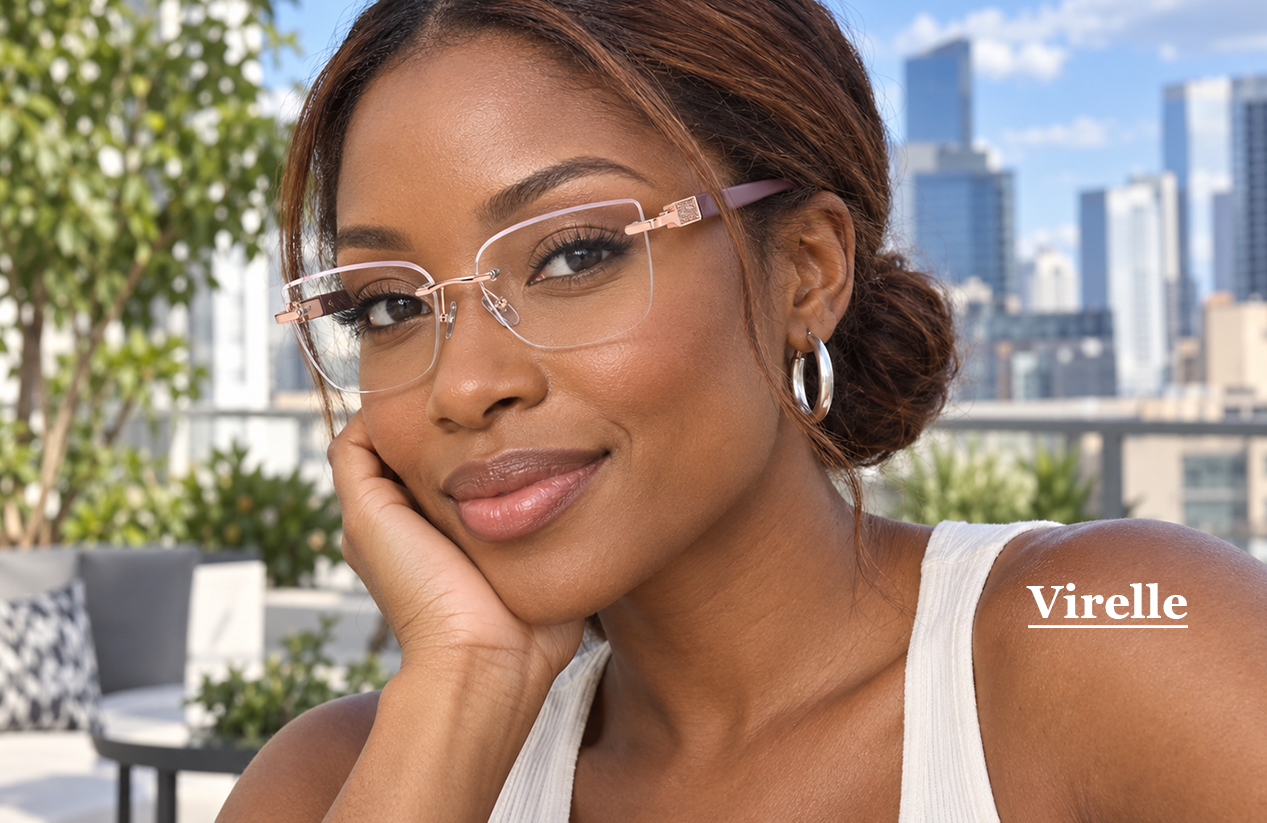
Rimless glasses work easily with both subtle and more defined makeup because they add very little visual weight around the eyes.
For everyday makeup, soft neutral shadow, light liner, defined lashes, and natural brows can stay visible without competing with a strong frame. If you prefer a minimal look, you can also keep the eyes simple and let blush or lip colour carry more of the overall look.
For evening makeup, metallic shadow, deeper crease colour, coloured liner, or a longer wing can remain noticeable without a full rim adding another strong outline. Semi-rimless styles can also work well when you want a little more structure around the upper eye.
If makeup plays a big role in how you choose frames, comparing women’s glasses in different shapes and frame styles can help you see which proportions work best with your usual eye looks.
Conclusion on Rimless Glasses and Makeup
Rimless glasses are a practical option when you want your eyeshadow, liner, and lashes to remain a visible part of your look. Their low visual weight leaves fewer frame lines competing with the eye area, while lens shape and size determine how much makeup stays in view. Semi-rimless styles offer a little more definition if you want a balance between subtle eyewear and noticeable structure. Try your final makeup with the glasses on, then adjust the placement rather than simply adding more product.
FAQs About Rimless Glasses and Makeup
Q1. Do rimless glasses make your eyes look bigger?
Not necessarily. The prescription in your lenses has more influence on whether your eyes appear slightly larger or smaller through glasses. Rimless frames mainly remove the strong border around the lenses, which can make the eye area feel more visually open.
Q2. Can you wear false lashes with rimless glasses?
Yes, as long as the lashes do not press against the lenses. Styles that curl upward rather than extending far forward may give you more clearance between the lashes and the glasses.
Q3. Why does my makeup look different after I put my glasses on?
Frames introduce new lines, colours, shadows, and proportions around your eyes, while prescription lenses can also change how the eye area appears. Check your makeup with your glasses on during application so you can see the finished effect.
Q4. Should eyeliner match the shape of your glasses?
It does not have to match exactly. You can use the frame shape as a reference, such as pairing an upswept wing with cat-eye lenses or a cleaner graphic line with angular frames, while still following your own eye shape.
Q5. Are semi-rimless glasses a good option if I still want my eye makeup visible?
Yes. Semi-rimless glasses leave part of the lens edge open while adding more structure than fully rimless frames. They can be a good choice when you want noticeable eyewear without surrounding the entire eye with a visible rim.