Lenses Guides
Do Photochromic Lenses Work in the Car? What Drivers Should Know


Photochromic lenses offer exceptional convenience outdoors because they darken under direct sunlight and return to a clear state indoors. However, many drivers notice that their lenses remain relatively light behind the steering wheel. This does not indicate a defective product; rather, it relates to the chemical reaction mechanism of photochromic dyes and the optical properties of automotive windshields.
Quick Takeaways
Automotive windshields block ultraviolet radiation, preventing standard photochromic lenses from fully darkening inside vehicles.
Photochromic performance is consistently stronger in direct outdoor sunlight than inside an enclosed cabin.
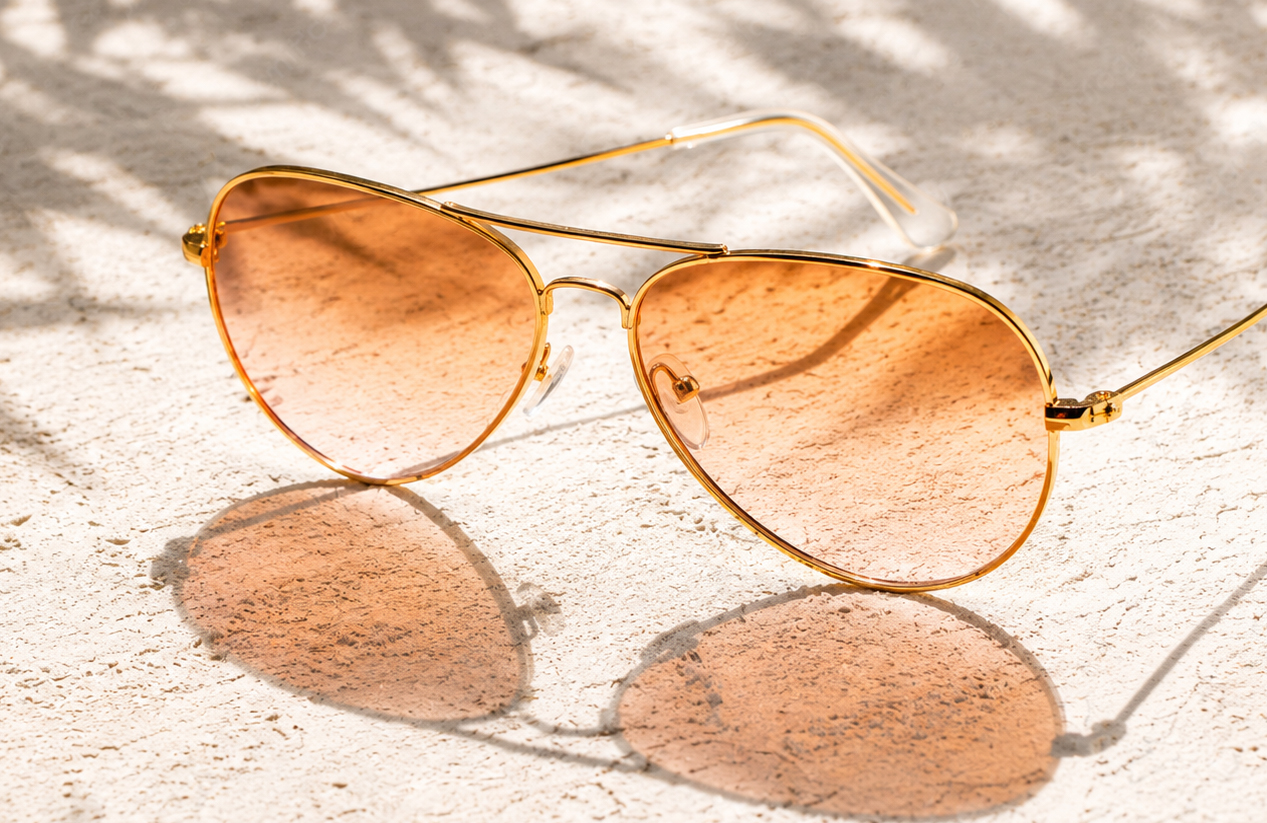
Prescription sunglasses provide a stable, uninterrupted tint for bright daytime driving.
Horizontal road glare requires specialized polarized filters, especially during low-sun angles and wet road conditions.
A darker lens tint does not inherently guarantee ultraviolet defense; always verify certified UV ratings.
The ideal eyewear solution depends on your daily balance between general commuting, indoor screen time, and prolonged highway driving.
What Photochromic Lenses Do Outdoors
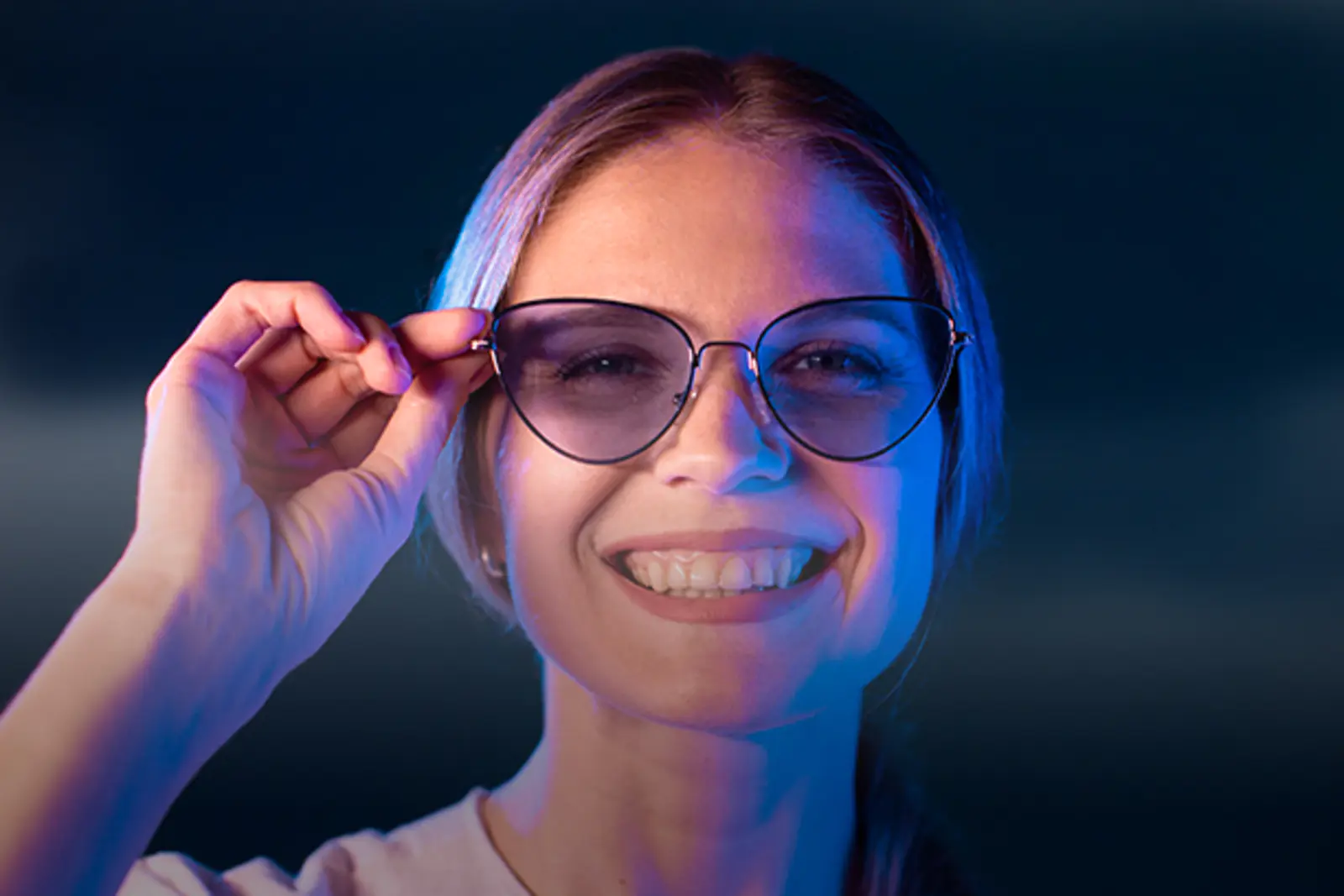
Photochromic lenses adapt dynamically to ambient light when you step outside into natural daylight. Outdoors, microscopic molecules embedded within the lens structure activate under ultraviolet rays to reduce overall luminance, then revert to total transparency once you step back inside. This seamless transition benefits commuters, students, and professionals moving frequently between indoor offices and outdoor settings without needing dedicated sunglasses for every brief transition.
Why Photochromic Lenses Behave Differently in the Car
Standard light-adaptive lenses remain predominantly clear inside vehicles because traditional photochromic molecules require direct ultraviolet radiation to trigger their darkening reaction. Modern laminated automotive windshields incorporate specialized safety interlayers designed to absorb up to ninety-nine percent of incoming ultraviolet rays. A clinical study examining UV transmission through vehicle glass confirms that front windshields filter out nearly all activating wavelengths, whereas side and rear windows allow variable levels of UV penetration.
Furthermore, peer-reviewed research on photochromic lens performance during driving illustrates that windshield UV attenuation directly restricts the optical density achieved by adaptive lenses in the driver seat. Cabin geometry, open side windows, sunroof tinting, and seasonal temperatures all influence how much activating light strikes the lens surface.
Because ambient temperature also affects photochromic kinetics—molecules darken more intensely in cold conditions and reverse faster in warm environments—drivers in hot summer cabins experience an even milder tint activation behind the wheel.

Photochromic Lenses vs. Prescription Sunglasses for Driving
Selecting between photochromic lenses and dedicated prescription sunglasses comes down to your primary driving environment and visual comfort priorities.
Evaluation Factor | Photochromic Lenses | Prescription Sunglasses |
|---|---|---|
Indoor and Outdoor Versatility | Exceptional convenience; one pair adapts automatically | Requires switching back to clear eyeglasses indoors |
Performance in Bright Sunlight | Moderate tint activation inside vehicles | Consistent, full-density tint regardless of windshield UV filtering |
Single-Pair Simplicity | Major convenience advantage for daily routines | Functions as a specialized secondary pair |
Horizontal Road Glare Control | Filters ambient brightness without polarized glare reflection control | Eliminates blinding reflective glare when equipped with polarized filters |
Digital Dashboard Legibility | Seamless viewing across navigation screens and heads-up displays | Polarized filters may interact with certain LCD instrument clusters |
If your daily schedule involves frequent daytime highway travel, reviewing specialized prescription sunglasses will provide steady optical comfort. For versatile all-day frames, explore the complete range of affordable prescription glasses to configure tailored lens packages.
When Photochromic Glasses Are Most Useful
Light-adaptive eyewear excels in routines that involve frequent movement across indoor and outdoor environments, eliminating the need to carry multiple cases. They are especially practical for:
Daily errands and retail shopping with continuous transitions between parking lots and storefronts.
Walking commutes through urban transit hubs, train platforms, and office lobbies.
School drop-offs and campus navigation during shifting morning light.
Outdoor lunch breaks and casual outdoor work sessions.
Travel itineraries that mix walking tours, museums, transit, and open-air sightseeing.

What to Check Before Ordering Photochromic Lenses Online
To ensure your new eyewear matches your visual lifestyle, evaluate several technical considerations before finalizing your purchase:
Primary environmental use: Light-adaptive lenses offer maximum utility for mixed indoor-outdoor routines, whereas long-haul highway drivers benefit from dedicated sun lenses.
Glare management: Assess whether you encounter blinding reflection from wet asphalt, hoods, or water surfaces, and explore polarized lenses for dedicated outdoor frames.
Certified ultraviolet protection: The FDA guidelines on sunglasses safety confirm that lens tint depth does not determine UV filtration; clear or lightly tinted lenses can deliver complete UV400 defense when manufactured with protective monomers.
Prescription parameters: Confirm your optical prescription, sphere, cylinder, and pupillary distance measurements are up to date.
Lens refractive index: Consider high-index lens materials (such as 1.61 or 1.67) for stronger prescriptions to keep lens edges slim and lightweight.
Single-pair versus two-pair strategy: A versatile photochromic frame covers everyday errands, while keeping a dedicated pair of polarized prescription sunglasses in your vehicle provides optimal driving safety.
Matching Light-Adaptive Lenses to Your Daily Lifestyle
Photochromic lenses remain an outstanding choice for individuals seeking all-in-one optical versatility. While vehicle windshields naturally moderate their activation behind the wheel, their rapid responsiveness and dependable indoor clarity make them ideal for active daily routines. Pairing light-adaptive everyday glasses with a dedicated set of driving sunglasses ensures optimal visual comfort across every lighting condition.
Common Questions About Photochromic Lenses
Q1. Do Photochromic Lenses Darken Completely Inside a Car?
Standard photochromic lenses darken only moderately inside vehicles because automotive windshield glass filters out the ultraviolet wavelengths required to fully activate the photochromic molecules.
Q2. Are Photochromic Lenses the Same as Transition Lenses?
Yes. Photochromic is the scientific term for lenses that adapt their tint in response to light exposure, as outlined in this guide to color-changing photochromic lenses, whereas Transitions is a specific brand of photochromic technology.
Q3. Are Photochromic Lenses Suitable for Driving?
Photochromic lenses are suitable for general daily driving; however, drivers who frequently commute during intense morning or afternoon glare often prefer polarized prescription sunglasses for stronger and more consistent tint density.
Q4. Can Photochromic Lenses Completely Replace Sunglasses?
Photochromic lenses replace sunglasses for most casual outdoor activities, but dedicated sunglasses remain preferable for intense glare, beach outings, water sports, and long-distance driving.
Q5. Should I Choose Photochromic Lenses or Prescription Sunglasses?
Select photochromic lenses if you want a single pair that automatically adapts for walking, office work, and daily errands. Choose dedicated prescription sunglasses if you require dark, polarized vision protection specifically engineered for driving and high-glare environments.