
Learning Center
What Glasses Should You Pack for a Trip? A Practical Eyewear Checklist


If you rely on prescription glasses, a practical travel setup usually includes your main pair, a backup pair, and one option for bright outdoor conditions. Add reading glasses only if you normally use them. The exact number depends on your itinerary, but the goal is simple: cover the vision needs you already have without filling your bag with unnecessary eyewear.
Quick Answer
Pack your main prescription glasses and one backup pair if you depend on glasses for everyday vision.
Add one sun option: prescription sunglasses, clip-ons, or photochromic lenses.
Bring reading glasses only if you normally need them for menus, books, screens, or close work.
Keep essential eyewear in your carry-on or personal bag when flying so it stays accessible.
Pack each spare pair in a protective case and save a current copy of your prescription before departure.
Which Glasses Do You Actually Need for Your Trip?
For most travelers who depend on prescription eyewear, one main pair + one backup pair + one outdoor solution is a practical starting point. You may need fewer physical frames if your primary glasses feature photochromic lenses or compatible clip-ons, while a longer or more activity-heavy itinerary may justify an additional specialized pair.
Use your actual travel itinerary to decide what earns space in your luggage.
Travel Need | What to Pack | When It Helps |
|---|---|---|
Everyday vision | Main prescription glasses | Sightseeing, dining, work, transport, general daily wear |
Backup vision | Second prescription pair | If your main pair is lost, misplaced, or damaged |
Bright outdoor conditions | Prescription sunglasses, clip-ons, or photochromic lenses | Daytime driving, beaches, walking tours, outdoor attractions |
Near vision | Reading glasses, if you regularly use them | Reading menus, books, maps, and using smartphones |
Specific activities | Activity-appropriate sports eyewear when needed | Cycling, hiking, water sports, or high-impact outdoor recreation |
Avoid packing a pair simply because you own it. A useful glasses packing list should strictly correspond to situations you realistically expect to encounter.
Before leaving, confirm that the prescription pair you plan to rely on is comfortable for extended wear and that the lenses and frame hinges are in good condition. If you need an updated second pair before your departure, EFE’s prescription glasses collection offers versatile frame shapes, durable materials, and customizable prescription lens options.

Should You Pack a Backup Pair of Prescription Glasses?
Yes, a backup pair is an essential precaution when you cannot comfortably navigate daily tasks without vision correction. The official CDC travel health kit guidance specifically advises international travelers to include spare prescription eyeglasses or contact lenses among their recommended supplies.
A second pair becomes even more valuable on international itineraries, remote road trips where you are the primary driver, or journeys to destinations where sourcing a replacement pair quickly is difficult. Your backup frame should use a current prescription that matches your daily vision needs and remain comfortable enough to wear full-time if necessary.
When flying, always pack your backup glasses inside your carry-on baggage or personal item rather than checked luggage. This safeguards your alternative eyewear should your checked baggage be delayed or misplaced. Similarly, avoid storing your primary and backup pairs together while out for the day; keep one with you and leave the other secured at your hotel or accommodation.
You do not need multiple identical backups for a standard holiday. If you are deciding how many glasses to take traveling, two functional prescription pairs represent a reliable baseline for dependent wearers, with extra additions reserved strictly for sun, reading, or sporting needs.
Prescription Sunglasses, Clip-Ons, or Photochromic Lenses for Outdoor Travel?
All three options perform reliably on the road. Select the solution that best matches how often you move between indoor and outdoor settings, how light you wish to pack, and your planned daily activities.
Prescription Sunglasses
Dedicated prescription sunglasses are a dependable option for itineraries featuring long stretches outdoors. They combine precise vision correction with dark, tinted sun protection, making them ideal for coastal sightseeing, beach vacations, open-air dining, and long daytime drives.
The trade-off is the need to carry a separate case and switch frames whenever you step indoors. For travelers who prefer dedicated UV coverage, you can explore EFE’s prescription sunglasses to see if a dedicated frame fits your travel routine.
Clip-On Sunglasses
Clip-ons allow you to retain your existing prescription glasses while adding a lightweight, polarized sun layer whenever you step outside. They require significantly less packing volume than a second full case and offer effortless adaptability during days with frequent indoor-outdoor transitions.
Proper fit is critical because clip-on mechanisms must align seamlessly with the base frame's dimensions. EFE offers custom-matched clip-on sunglasses for prescription glasses across compatible frame models, providing an ultra-compact solution for minimalist packers.
Photochromic Lenses
Photochromic lenses cater to travelers who prefer a single pair that automatically adapts its tint as ambient light changes. They minimize the amount of gear you carry when transitioning between historic sites, museums, and sunlit city plazas.
Ensure that light-adaptive lenses align with your planned activities. If daytime driving is a major component of your trip, review the technical specifications beforehand, as standard photochromic lenses often stay clear behind automotive windshields that block UV rays.
Regardless of which sun design you choose, certified UV protection remains far more important than how dark the lens appears. According to research from the National Eye Institute on UV protection and the FDA sun safety recommendations, always select eyewear labeled UV400 or certified for 100% UVA/UVB blockage.

What Eyewear to Pack for Flights, Road Trips, and City Travel
Different travel modes influence which pair of glasses needs to be most accessible. While you rarely need an entirely different glasses collection for every trip, thoughtful placement makes transit noticeably smoother.
Flights
Wear your primary prescription glasses on the plane or keep them directly in your personal item within arm's reach. Your backup pair should remain securely zipped in your cabin bag inside a hard-shell case. If you plan to read, handle digital work, or watch in-flight movies, keep your dedicated reading glasses in the same accessible compartment.
Avoid packing essential eyewear deep inside large overhead roller bags. A slim glasses case tucked into an exterior pocket ensures you can quickly clean lenses, switch frames, or store them safely when resting.
Road Trips
On road trips, prioritize your driving eyewear and place it within reach before starting the engine. That might mean your regular clear glasses paired with prescription sunglasses, compatible clip-ons, or driving-specific lenses.
Carrying a backup prescription pair is critical if you are sharing driving duties. Always store spare pairs in a protective case rather than leaving them loose in glove compartments or cup holders, where heat and friction can warp frames and scratch lens coatings.
City Trips
Urban exploration requires frequent shifts between hotels, underground transit, art galleries, restaurants, and outdoor walking tours. A streamlined three-piece rotation is ideal: your primary pair, one backup, and one dedicated sun option.
Clip-ons and photochromic lenses reduce gear management during quick stops, whereas dedicated prescription sunglasses excel when the day revolves around open-air parks and walking tours. For extended international itineraries, store a digital photo of your current prescription on your smartphone to simplify emergency local replacements.
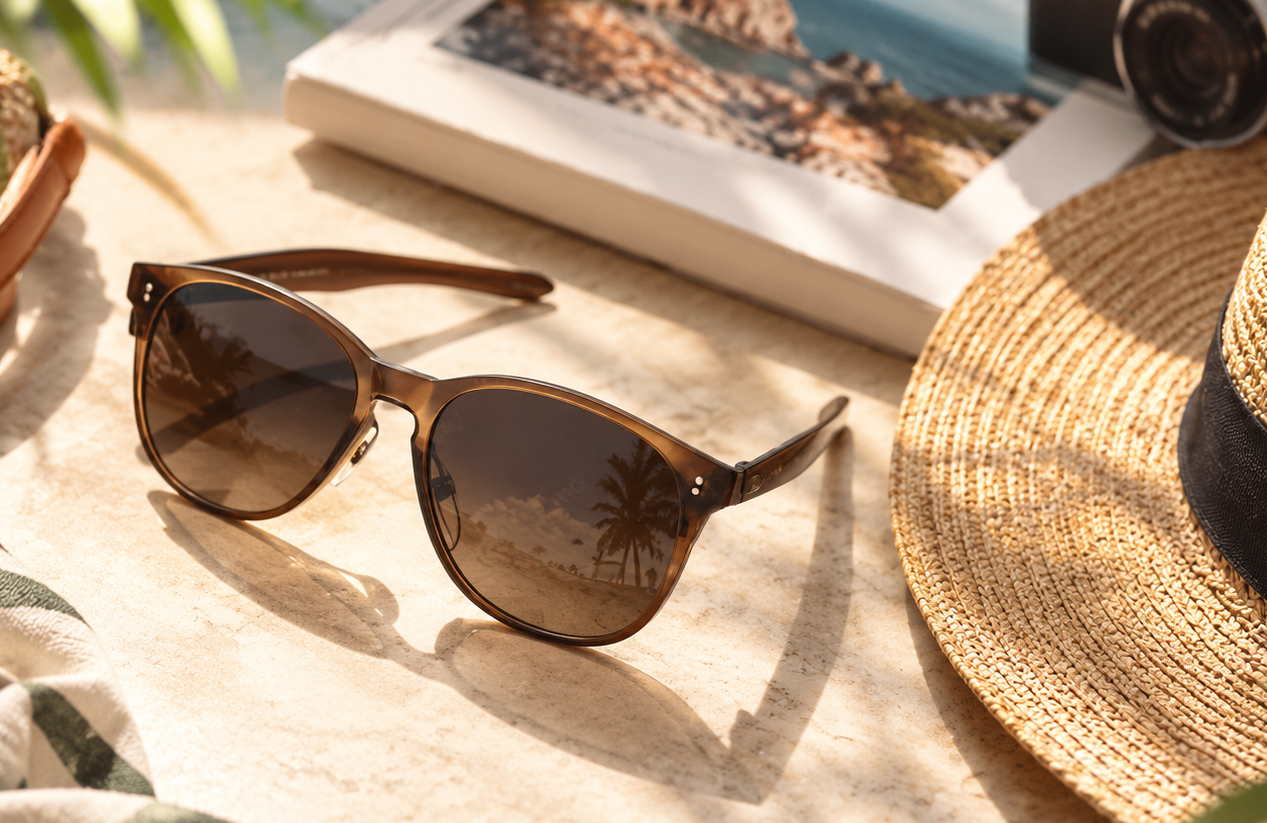
How to Pack and Protect Your Glasses While Traveling
Consistent packing habits prevent broken frames and scratched coatings. Start with a structured protective case for every pair entering your luggage. While microfiber pouches keep dust away, rigid hard-shell cases prevent crushing under compressed luggage.
A practical glasses travel kit should include:
Your primary prescription glasses
One reliable backup prescription pair
Your chosen sun protection option
Reading glasses, if required for close tasks
Hard-shell protective cases for each frame
A clean microfiber cleaning cloth
Travel-sized lens cleaning spray (TSA-compliant)
A digital or printed copy of your prescription
Keep loose lenses separated from house keys, coins, portable chargers, and metal zippers. Whenever you take your glasses off, put them straight into their case rather than slipping them unprotected into jacket pockets or airline seat pockets.
Inspect your eyewear before departure: tighten loose hinge screws, wipe away buildup around nose pads, and inspect the frame alignment. Resolving a loose screw at home is far simpler than searching for a repair kit mid-vacation.
Assign each frame a distinct role in your routine. Your main pair stays on your face, the backup stays safe in your lodging, and your sunglass option stays in your day bag. This clear organization keeps your vision reliable without overburdening your luggage.
Conclusion: How Many Glasses to Take Traveling
A dependable travel setup begins with the prescription glasses you wear every day, accompanied by one reliable backup pair and sun protection tailored to your destination. Prescription sunglasses, clip-on attachments, and photochromic lenses each solve specific travel challenges, while reading or sports eyewear should only join your trip if you use them regularly. Keep vital pairs protected and accessible in your carry-on luggage, secure a copy of your prescription, and pack to support real daily activities.
FAQs About How Many Glasses to Take Traveling
Q1. How Many Pairs of Glasses Should I Take Traveling?
For most travelers who rely on prescription lenses, packing two pairs (one primary pair and one backup pair) provides the ideal balance of security and convenience. Add a sun solution or reading glasses only when your itinerary and daily vision habits require them.
Q2. Do I Really Need Backup Glasses for Travel?
Yes. Packing a backup pair is an essential safeguard if your primary glasses are accidentally lost, sat on, or damaged far from home. It is especially vital on international trips, cruises, and vacations involving driving.
Q3. Should I Put Prescription Glasses in Checked Luggage?
No. Always carry your primary glasses and backup eyewear inside your carry-on bag or personal item. Checked baggage can be delayed, mishandled, or subjected to rough pressure that can crack optical frames.
Q4. Are Photochromic Glasses Practical for Travel?
Yes. Photochromic lenses allow you to travel with fewer physical frames by seamlessly darkening outdoors and clearing up indoors. However, if you plan to spend long hours driving, remember that car windshields block the UV light required to activate most standard photochromic lenses.
Q5. Do I Need Prescription Sunglasses If I Have Clip-Ons?
No. Both systems provide comprehensive UV protection while maintaining sharp vision correction. Prescription sunglasses serve as a dedicated, durable outdoor frame, while clip-ons maximize luggage space by attaching directly to your everyday glasses.
Q6. What Should Be in a Glasses Travel Kit?
A well-prepared travel kit includes your primary glasses, a backup pair, protective hard cases, a clean microfiber cloth, travel-size lens cleaner, and a digital image of your vision prescription on your phone.

