
Learning Center
Aviator Glasses vs Aviator Sunglasses: How to Choose the Right Everyday Style


Aviator glasses and aviator sunglasses share the same iconic silhouette, but they serve distinctly different everyday purposes. Aviator glasses feature clear or prescription lenses tailored for indoor vision correction, whereas aviator sunglasses incorporate specialized tinted lenses engineered for outdoor glare reduction and ultraviolet defense. Choosing the right pair depends on your primary environment, facial proportions, bridge anatomy, and specific prescription requirements.
Quick Takeaways
Select aviator eyeglasses for daily indoor use, office work, and clear prescription vision.
Choose aviator sunglasses for outdoor activities where sun protection, polarization, and tint depth take priority.
Prioritize proper ergonomic fit by verifying frame width, bridge clearance, and lens height so the lower rims rest comfortably above your cheeks.
Explore prescription sunglasses to combine sharp optical correction with high-performance sun lenses.
Remember that lens tint darkness does not indicate ultraviolet protection; always verify certified UV400 ratings before purchasing.
Differences Between Aviator Glasses and Aviator Sunglasses
Deciding between clear aviator frames and dedicated aviator sunglasses depends primarily on your daily lifestyle and lighting environments.
Key Feature | Aviator Optical Glasses | Aviator Sunglasses |
|---|---|---|
Primary Purpose | All-day indoor and general vision correction | Outdoor eye defense, UV blocking, and glare reduction |
Lens Technology | Clear single-vision, progressive, or blue-light blocking lenses | Polarized, mirrored, tinted, or prescription sun lenses |
Visual Aesthetic | Highlights facial features and browline structure | Delivers bold contrast through rich lens tints and mirror finishes |
Indoor Suitability | Engineered for continuous indoor and screen use | Typically removed indoors due to light attenuation |
Prescription Support | Broad compatibility across high and low prescriptions | Available on select prescription-ready sunglass frames |
Optimal Use Cases | Workplaces, reading, video conferencing, social settings | Driving, beach travel, outdoor sports, bright sunny conditions |
How Lens Shape and Bridge Fit Affect the Look
Because aviators feature expansive lens profiles and distinctive double bridges, minor structural variations alter how they sit on your face.
Lens Shape and Vertical Depth
Traditional teardrop lenses extend significantly down the cheekbones. While this creates a signature retro aesthetic, deep lenses may touch your cheeks during expressive conversation or smiling.
When assessing a new pair, verify the following ergonomic checkpoints:
The lower rim maintains clear separation from your cheeks while speaking and smiling.
Your eyelashes do not brush against the inner lens surface during natural blinking.
The total frame width aligns harmoniously with the outer edges of your temples.
The vertical depth provides adequate field of view without resting against your jawline.
If classic teardrop lenses feel overly elongated, consider modern navigator or squared aviator frames that deliver the same vintage appeal with reduced vertical depth.
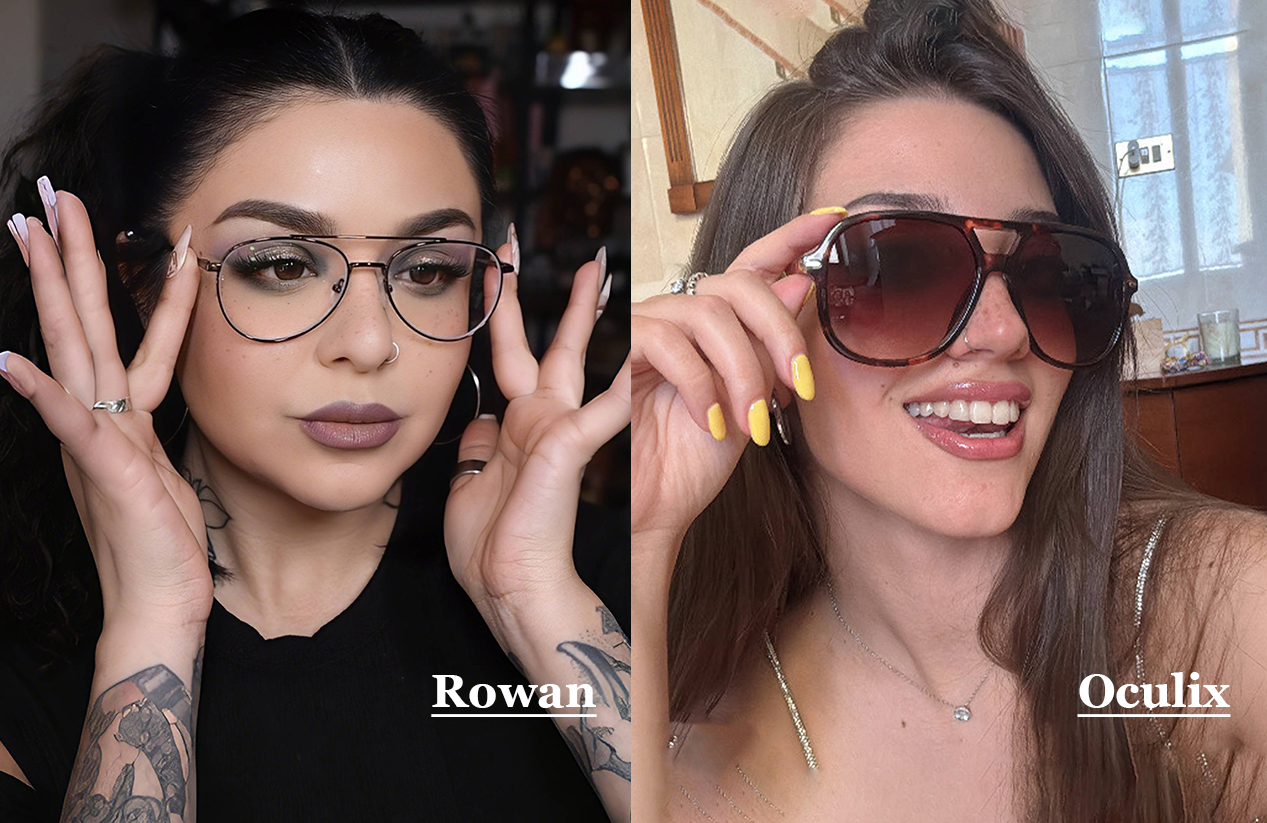
Bridge Structure and Nose Pad Placement
The bridge construction governs the vertical position of the frame on your nasal crest. An improperly sized bridge allows deep teardrop lenses to slide downward, creating facial imbalance.
Most metal aviator frames incorporate adjustable silicone nose pads that allow precise customization for bridge width and vertex distance. In contrast, acetate aviators utilize fixed saddle bridges that require precise nasal fit out of the box.
Never rely solely on numerical bridge measurements. Individual nasal bridge contours, pad angle, and frame wrap jointly determine the final resting position on your face.
Who Benefits Most from Aviator Frames for Daily Wear?
Aviator eyewear offers distinctive personality without the heavy visual density of thick oversized frames.
Aviator silhouettes are particularly well suited for:
Softening sharp facial angles: Rounded teardrop contours balance strong angular jawlines and square face shapes.
Elongating rounder features: Square-edged navigator frames introduce architectural definition across rounded cheeks.
Accentuating the upper browline: The iconic horizontal brow bar adds visual balance across the eye area.
Versatile styling: Exploring acetate vs metal frame materials lets you choose between delicate wire rims and bold acetate contours.
Face shape recommendations serve as helpful guidelines rather than rigid rules. Bridge height, brow positioning, hairstyle, and personal taste are equally important in selecting the ideal aviator.

Prescription Lenses, Tints, and Sunglass Options
Aviator frames support varied optical configurations depending on your vision correction needs and daily environments.
Clear Prescription Lenses
When selecting clear aviators for all-day wear, optical prescription compatibility should guide your frame choice.
Clinical data from the National Eye Institute on refractive errors outlines how specific lens geometries correct myopia, hyperopia, and astigmatism. Because oversized aviator lenses increase edge thickness in high-minus prescriptions, choosing high-index lens materials ensures a slim, attractive profile.
Prescription Sunglasses
Prescription sunglasses eliminate the hassle of wearing clip-ons or layering sunglasses over standard eyewear outdoors.
The complete sunglasses collection at EFE offers diverse aviator styles fully customizable with tinted single-vision or progressive lenses.
Lens Tints and UV Defense Standards
Lens colors influence contrast perception and ambient warmth. Neutral gray tints preserve true color fidelity, while amber and brown lenses enhance depth perception on overcast or hazy days.
UV filtration is an independent optical property from lens color darkness.
Official health updates from the FDA sun safety recommendations highlight that lenses must provide 100% UVA/UVB or UV400 protection, warning that dark lenses without certified UV filters cause pupils to dilate and absorb higher amounts of harmful radiation.

What to Check Before Buying Aviator Glasses Online
Because aviators feature distinct double bridges and generous lens heights, reviewing precise frame dimensions ensures a tailored fit.
Review these critical specifications before placing your order:
Total frame width: Compare the hinge-to-hinge width against a well-fitting pair in your current eyewear collection.
Lens height and width: Ensure vertical depth provides full visual coverage without brushing your cheekbones.
Bridge type: Choose between adjustable silicone nose pads for custom alignment and molded acetate saddle bridges.
Temple arm length: Verify that the temple arms curve gently behind your ears without exerting pressure on your mastoid bone.
Prescription parameters: Confirm your sphere, cylinder, and pupillary distance fall within the recommended range for large-diameter lenses.
Sun lens coatings: Check for integrated polarization, backside anti-reflective coatings, and certified UV400 defense.
Digital fitting tools: Utilize online virtual try-on software to preview lens scale and double-bridge proportions on your face.
Choosing Aviator Frames That Match Your Lifestyle
The ideal aviator balances timeless styling with your daily wardrobe. Consult this guide to matching frames to your unique face shape to find a flattering silhouette.
For professional corporate environments, lightweight titanium or slim gold wire aviators maintain an understated, intellectual presence.
For bold fashion styling, vintage-inspired acetate aviators with broad brow bars deliver commanding presence and retro flair.
For active outdoor lifestyles, lightweight polarized aviator sunglasses provide superior glare elimination during driving and watersports.
Final Thoughts on Choosing Your Aviator
Choose aviator eyeglasses if you need a refined, character-rich frame for daily indoor vision correction, and select aviator sunglasses when high-performance sun defense and glare control take precedence. Balancing vertical lens depth, bridge anatomy, and certified lens technology ensures your aviators deliver lasting comfort, clear vision, and timeless style.
FAQs About Aviator Glasses and Sunglasses
Q1. Can Aviator Glasses Accommodate Strong Prescriptions?
Yes. Aviator frames support custom prescriptions; however, high-index lenses are strongly recommended for stronger prescriptions to keep lens edge thickness slim within metal rims.
Q2. Are Aviator Glasses and Aviator Sunglasses the Same Frame Shape?
They share the same fundamental double-bridge silhouette. Optical aviators use clear, anti-reflective, or blue-blocking lenses, whereas sunglasses utilize dark tinted, polarized, or mirrored sun lenses.
Q3. Do Aviator Frames Flatter Round Face Shapes?
Yes. Navigator-style squared aviators add geometric structure and angular contrast that flatters softer, round facial contours.
Q4. Can You Get Polarized Lenses in Aviator Glasses?
Polarization is designed specifically for sunglasses to filter blinding horizontal glare from asphalt, water, and snow during outdoor activities.
Q5. How Do I Prevent Aviator Lenses from Touching My Cheeks?
Select aviators equipped with adjustable nose pads to elevate the frame slightly, or choose squared navigator frames with shallower vertical lens depth.
Q6. What Should I Check When Ordering Aviators Online?
Consult a comprehensive online frame size guide to verify total frame width, bridge width, and lens height before purchasing.

