Eyeglasses Guides
Anti-Reflective Glasses: How Lens Coating Helps with Glare and Daily Eye Comfort


Bright office fixtures, digital monitors, oncoming headlights, and ambient lamps can create distracting reflections across eyeglass lenses. These reflections can cause visual fatigue, particularly when wearing corrective eyewear throughout the day. Anti-reflective glasses incorporate a specialized multi-layer lens coating engineered to reduce surface reflections and maximize luminous transmittance. While they cannot eliminate every source of eye fatigue, they significantly enhance optical clarity and minimize distracting glare in everyday environments.
Quick Takeaways
An anti-reflective coating eliminates surface reflections, keeping lenses transparent around computer screens and bright lights.
Anti-glare and anti-reflective are frequently used interchangeably in retail, though anti-glare can encompass broader light-reduction technologies.
Anti-reflective treatments are highly recommended for regular computer work, night driving, virtual meetings, and high-index lenses.
Coatings reduce external glare reflections but must be paired with an accurate prescription and ergonomic workstation lighting for complete comfort.
Anti-Glare vs. Anti-Reflective: Understanding the Difference
In everyday optical shopping, anti-glare glasses and anti-reflective glasses are often treated as synonymous, but they describe slightly different optical concepts.
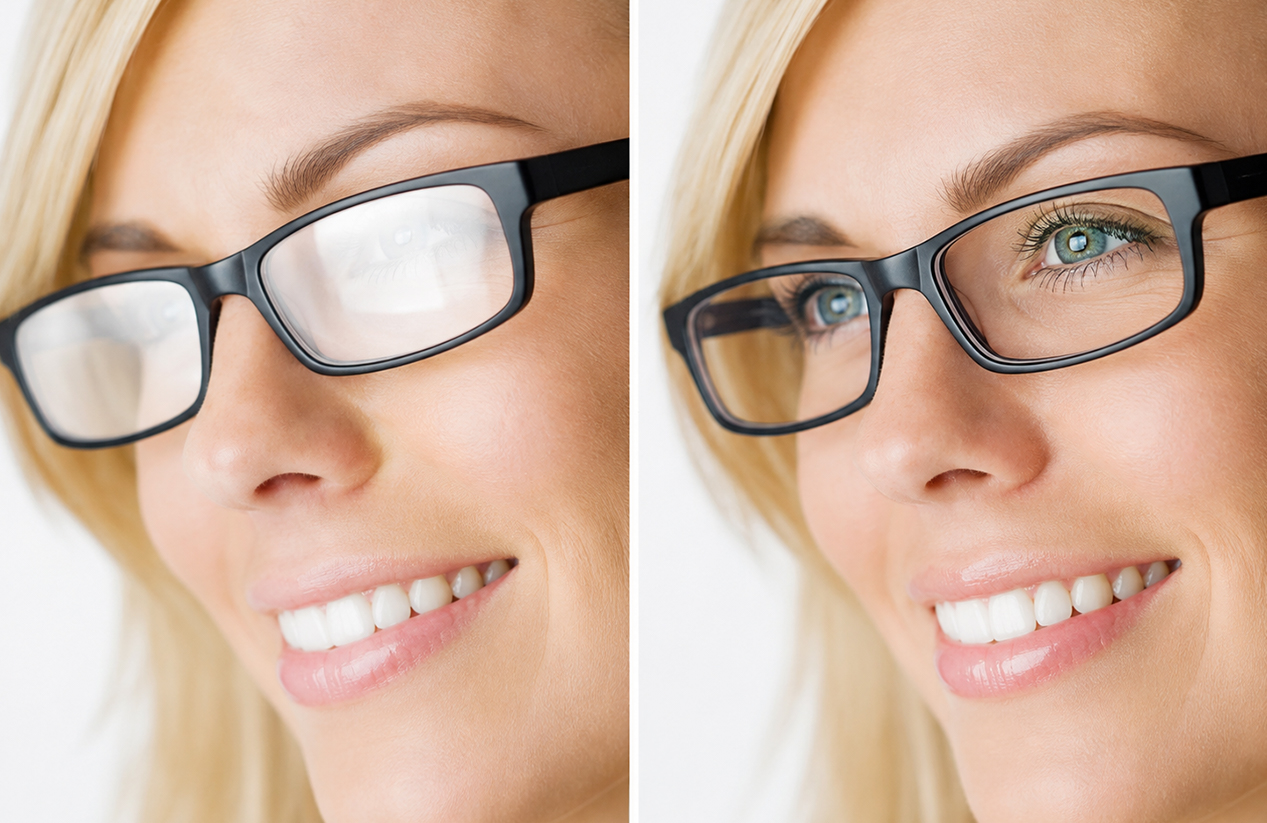
Anti-reflective (AR) refers specifically to a microscopic vacuum-deposited treatment applied to both surfaces of a lens. These ultra-thin layers utilize destructive light interference to neutralize bouncing light waves, allowing up to ninety-nine percent of available light to transmit cleanly to the eye.
In contrast, anti-glare is a broad umbrella term used by consumers. While AR coatings eliminate surface bounce, other lens enhancements target different types of glare. For instance, polarized sunglasses feature a chemical laminated filter designed specifically to block blinding horizontal light reflected off water, snow, and asphalt.
Optical Term | Technical Mechanism | What to Verify Before Buying |
|---|---|---|
Anti-Reflective (AR) | Multi-layer coating reducing lens-surface reflections | Verify whether AR coating is factory-applied or selectable as an add-on |
Anti-Glare | General term describing overall glare and reflection reduction | Check whether the product utilizes an AR coating, polarization, or a tinted filter |
Polarized | Embedded chemical filter blocking horizontal reflected light | Confirm intended use is for daytime outdoor glare protection |
When reviewing custom prescription lens options, look for clear specifications detailing anti-reflective capabilities rather than relying on generic marketing descriptions.
How Lens Reflections Impact Screen Work and Night Driving
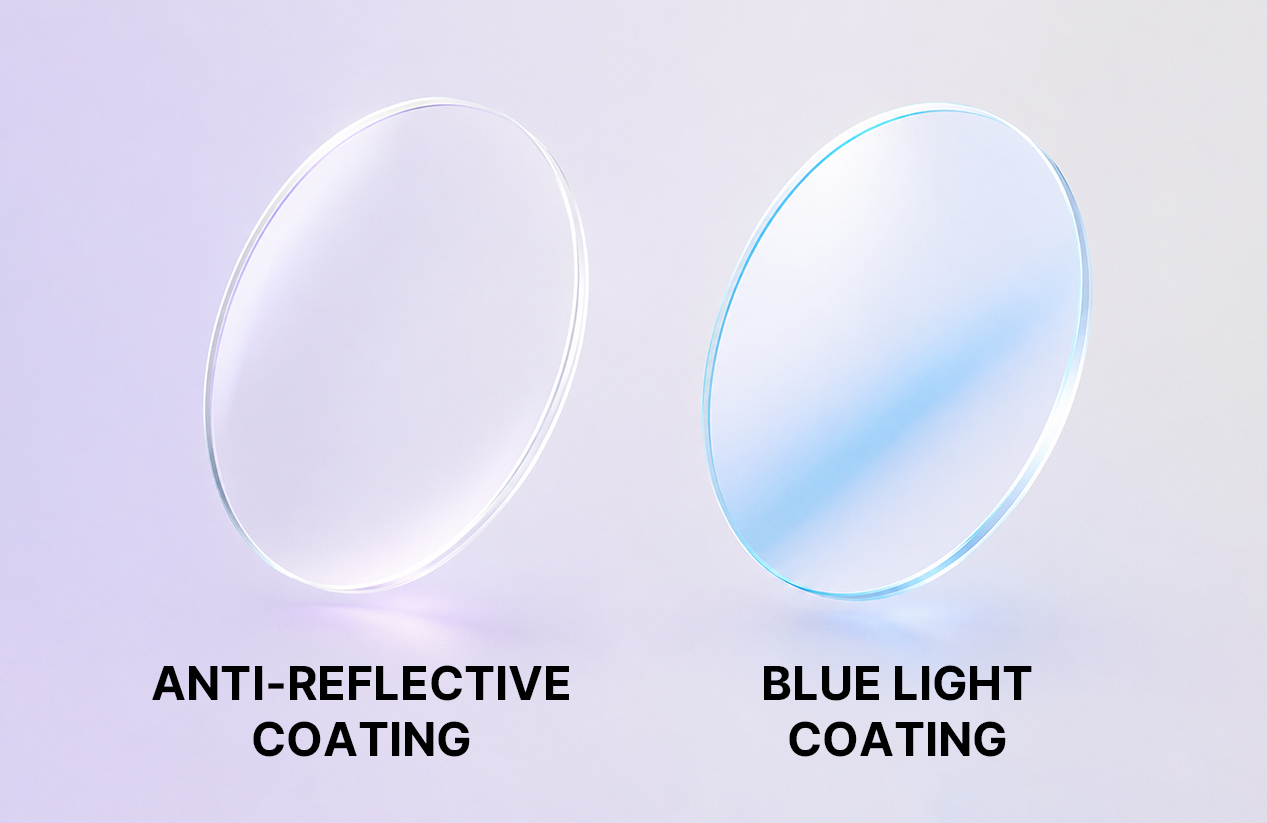
Reflective glare is most noticeable when a strong light source contrasts sharply with a darker backdrop, making computer monitors and night highways prime triggers for visual discomfort.
Digital Displays and Office Environments
Anti-reflective coatings improve visual comfort by eliminating specular reflections caused by overhead fluorescent tubes, desk lamps, and neighboring windows. By neutralizing reflections directly on the lens surfaces, your eyes receive unobstructed contrast from digital displays.
However, optical coatings function best as part of an ergonomic workstation setup.
Clinical guidance from the American Optometric Association on computer vision syndrome emphasizes combining glare-reduction treatments with proper monitor positioning and ambient lighting management.
To optimize your daily screen comfort, pair AR-coated lenses with these workplace best practices:
Position computer monitors perpendicular to windows to prevent direct surface glare.
Match screen brightness to surrounding room illumination to avoid excessive contrast.
Position displays approximately twenty to twenty-eight inches away at a slight downward viewing angle.
Follow the 20-20-20 rule to rest your ciliary focusing muscles during long work sessions.
Ensure your prescription is up to date for your specific intermediate screen distance.
Nighttime Driving
Anti-reflective coatings provide substantial benefits during nighttime driving when bright LED headlights, high beams, and reflective road signs produce ghost images across standard untreated lenses.
The American Academy of Ophthalmology confirms in its guide to eyeglasses and lens coatings that anti-reflective treatments significantly diminish glare, making nighttime driving safer and more comfortable for drivers sensitive to headlight flare.

When Anti-Reflective Coating Delivers the Greatest Benefit
Anti-reflective treatments are valuable for nearly every eyeglass wearer, but they offer distinct advantages in specific daily scenarios:
Extensive computer work and office lighting: Eliminates haloing and surface glare from screens and overhead lighting.
Night commuters: Reduces distracting starbursts around oncoming headlights and streetlamps.
Wearers of high-index lenses: Because high-index lenses naturally reflect more light than standard plastic, an AR coating is essential to restore optimal transparency.
Video meetings and photography: Prevents computer screen reflections on camera, keeping your eyes clearly visible on Zoom and Teams calls.
All-day single-pair wearers: Ensures clear vision across shifting lighting conditions from morning commutes to evening screen time.
What to Verify Before Ordering Coated Lenses Online
When selecting eyewear online, look closely at technical lens specifications and protective coating stacks to make an informed choice.
Review these critical factors before completing your order:
Verify your current prescription: Ensure your sphere, cylinder, axis, and pupillary distance measurements are current.
Confirm specific coating terminology: Ensure the product description explicitly states anti-reflective (AR) coating.
Select appropriate lens materials: Explore this guide to different types of eyeglass lenses to choose the optimal refractive index for your prescription.
Evaluate multi-coating packages: Look for premium coating stacks that combine anti-reflective properties with hydrophobic (water-repellent), oleophobic (oil-resistant), and anti-scratch layers.
Match the frame to your lifestyle: When browsing prescription glasses online, confirm that your chosen frame supports your required lens type and coating package.
Matching Lens Coatings to Daily Lighting Environments
Selecting the right lens configuration is straightforward when tailored to your primary lighting challenges.
Primary Daily Scenario | Recommended Lens Configuration |
|---|---|
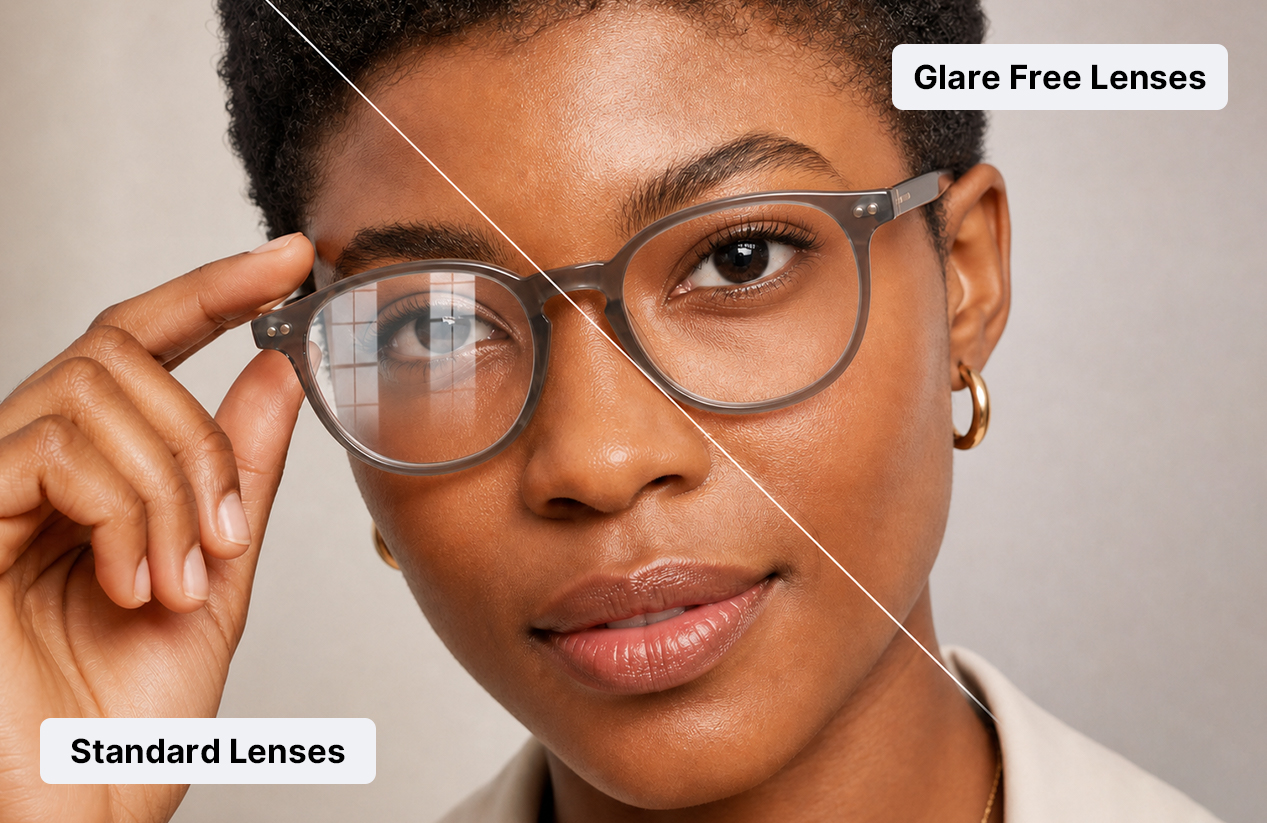
Intensive screen use in corporate offices | Anti-reflective coating combined with blue-light filtration |
Frequent nighttime driving and commuting | Clear prescription lenses equipped with premium multi-layer AR coating |
Video conferencing, public speaking, and photography | High-transmittance AR coating to maximize eye contact on camera |
High prescription requiring 1.67 or 1.74 index | Mandatory high-index AR coating to offset natural surface reflectivity |
Daytime driving, boating, and outdoor sports | Polarized sun lenses with backside anti-reflective coating |
Active outdoor routines exposed to rain and dust | AR coating enhanced with hydrophobic and oleophobic topcoats |
Coated lenses often display a faint green, blue, or violet residual sheen when tilted at sharp angles. This subtle color reflex is normal and reflects the specific wavelength tuning of the anti-reflective stack.
Final Recommendations for Clear, Glare-Free Vision
Anti-reflective glasses provide an effective solution for eliminating distracting lens reflections across screens, headlights, and office lighting. By improving light transmission through the lenses, AR treatments deliver sharper contrast, reduced eye strain, and a more natural on-camera appearance throughout the day.
FAQs About Anti-Reflective Glasses and Coatings
Q1. Is Anti-Reflective Coating Worth the Investment?
Yes. Anti-reflective coatings provide substantial visual benefits for anyone working on computers, driving at night, or wearing high-index lenses by maximizing light transmission and eliminating distracting glare.
Q2. Are Anti-Glare and Anti-Reflective Lenses Identical?
While often used interchangeably in retail marketing, anti-reflective specifically refers to a multi-layer optical coating that eliminates surface reflections, whereas anti-glare is a general term that may also encompass polarization and tint filters.
Q3. Do Anti-Reflective Glasses Help Reduce Computer Eye Strain?
Anti-reflective coatings eliminate surface reflections from screens and surrounding lights, helping to reduce visual fatigue when combined with proper monitor positioning and regular screen breaks.
Q4. Can Anti-Reflective Coatings Improve Night Driving Vision?
Yes. AR coatings minimize ghosting and starburst reflections caused by oncoming headlights, making night driving significantly more comfortable.
Q5. Why Do Anti-Reflective Lenses Show a Faint Green or Blue Tint?
High-quality AR coatings reflect a tiny fraction of light within specific non-critical wavelengths, creating a subtle green, blue, or violet residual sheen that confirms the coating is working properly.
Q6. What Is the Best Way to Clean Anti-Reflective Lenses?
Rinse lenses with lukewarm water to remove abrasive dust particles, apply an optical-safe lens spray, and gently wipe clean using a clean microfiber cloth. Avoid household glass cleaners containing ammonia or bleach.