
Learning Center
What Is Glaucoma? A Complete Guide to the Condition and Eyewear Selection


When people think about eye health, they often focus on visual clarity—how sharp and crisp the world looks. But not all vision problems are about sharpness. Some conditions, like glaucoma, affect vision in more subtle yet serious ways.
Understanding what is glaucoma and how it impacts your daily life is essential for protecting your long-term vision. In this guide, we’ll explain the condition, explore glaucoma symptoms and treatment, and show how the right eyewear can improve comfort and confidence if you are living with glaucoma.
What Is Glaucoma? The “Silent Thief of Sight”
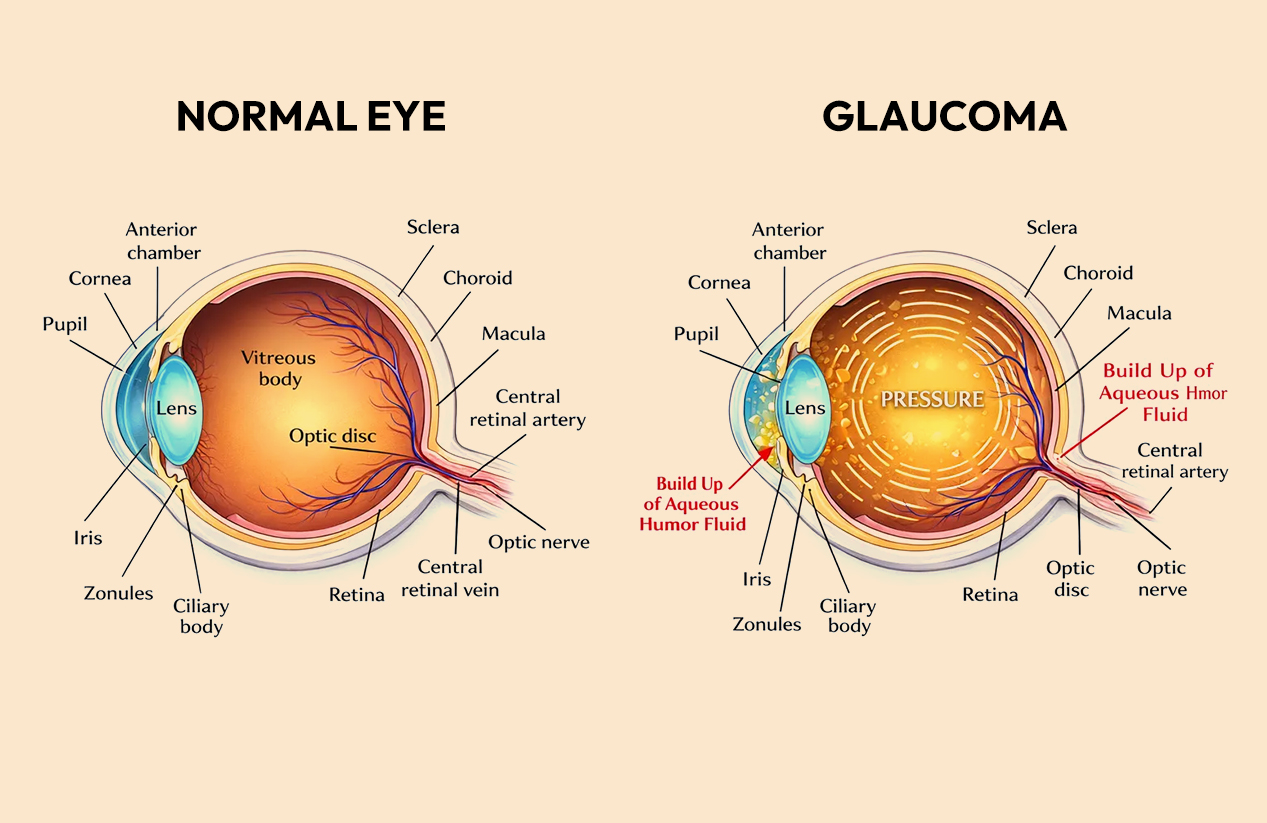
Glaucoma is not a single disease but a group of eye conditions that damage the optic nerve. This nerve plays a crucial role in vision, acting as a pathway that carries visual information from the retina to the brain.
In most cases, this damage is caused by increased pressure inside the eye, known as intraocular pressure (IOP). Over time, this pressure can disrupt the optic nerve, leading to glaucoma vision loss, which is often permanent.
Glaucoma is often called the “silent thief of sight” because:
It develops slowly
Early symptoms are minimal or absent
Vision loss begins in peripheral areas
Without regular eye exams, many people don’t realize they have glaucoma until noticeable vision loss occurs.
Does Glaucoma Change Your Glasses Prescription?
A common question is whether glaucoma affects your need for glasses.
The answer is: not directly.
Glaucoma does not typically change your refractive error (such as nearsightedness or farsightedness). Unlike conditions like cataracts or presbyopia, glaucoma affects the optic nerve—not the eye’s focusing ability.
However, glaucoma can change how you experience vision:
Reduced peripheral (side) vision
Increased light sensitivity
Difficulty adapting to lighting changes
Because of these changes, your current glasses may feel less effective, even if your prescription has not changed.
The Impact of Glaucoma Vision Loss
As glaucoma progresses, it often affects the visual field rather than central clarity.
Common visual effects include:
Loss of peripheral vision
Tunnel vision in advanced stages
Difficulty navigating spaces
Reduced confidence when driving, especially at night
Many patients can still read clearly, but tasks like walking in crowded areas or detecting movement from the side become more challenging.
This is why best glasses for glaucoma patients focus not just on clarity, but on overall visual support.

Why Specialized Eyewear Matters for Glaucoma Patients
For individuals with glaucoma, eyewear becomes more than a vision correction tool—it becomes part of daily comfort and safety.
1. Managing Light Sensitivity
Many glaucoma patients experience photophobia (light sensitivity), especially after treatments or when using medicated eye drops.
Eyewear for light sensitivity can help reduce discomfort in bright environments, including sunlight and indoor lighting.
2. Enhancing Contrast Sensitivity
Glaucoma can reduce the ability to distinguish objects from their background.
Lenses with contrast-enhancing tints can:
Improve depth perception
Make edges and shapes clearer
Support safer navigation
3. Reducing Glare and Halos
Glare from headlights, screens, or reflective surfaces can worsen visual discomfort.
Special coatings help:
Minimize halos at night
Improve clarity in low-light conditions
Reduce visual fatigue
How to Choose the Best Glasses for Glaucoma Patients
Selecting the right eyewear involves both lens technology and frame design.
At EFE Glasses, a variety of customizable options are available to support individuals managing glaucoma and other visual conditions.
Essential Lens Features
Polarized Lenses
Ideal for outdoor use, polarized lenses reduce glare from reflective surfaces like roads, water, and glass—making them essential for light-sensitive eyes.
Contrast-Enhancing Tints
Yellow, amber, or brown lenses improve contrast and reduce blue light, helping objects stand out more clearly.
Anti-Reflective (AR) Coating
This coating reduces reflections on both sides of the lens, improving night vision and reducing glare from screens and headlights.
Photochromic (Transition) Lenses
These lenses automatically adjust to changing light conditions, making them especially helpful for people who struggle with light adaptation.
Frame Features for Comfort and Function
Lightweight Materials
Frames made from titanium or TR90 reduce pressure on the nose and ears, making them comfortable for all-day wear.
Wider Field of View
Larger lens areas (such as oversized or aviator styles) help maintain a broader field of vision, which is especially important for those with peripheral vision loss.

Living Well with Glaucoma
Although glaucoma is a serious condition, it does not mean giving up an active or stylish lifestyle. The key is shifting your focus from just “clear vision” to comfortable and protected vision.
Regular check-ups with an eye care professional are essential for monitoring the condition and adjusting treatment as needed.
Once your eye health is properly managed, choosing supportive eyewear from brands like EFE Glasses can help you:
Improve daily comfort
Enhance visual clarity in real-world situations
Maintain confidence in your style
Conclusion
Glaucoma is a progressive condition, but with early detection and proper care, its impact can be managed effectively.
Understanding what is glaucoma, recognizing symptoms, and choosing the right eyewear can significantly improve your quality of life.
With advanced lens technology and thoughtful frame design, EFE Glasses helps make vision not only clearer—but more comfortable and adaptable to your everyday needs.
Because protecting your vision isn’t just about seeing better—it’s about living better.

